


How to Select the Right Filler Masterbatch Addition Rate for PE Blown Film
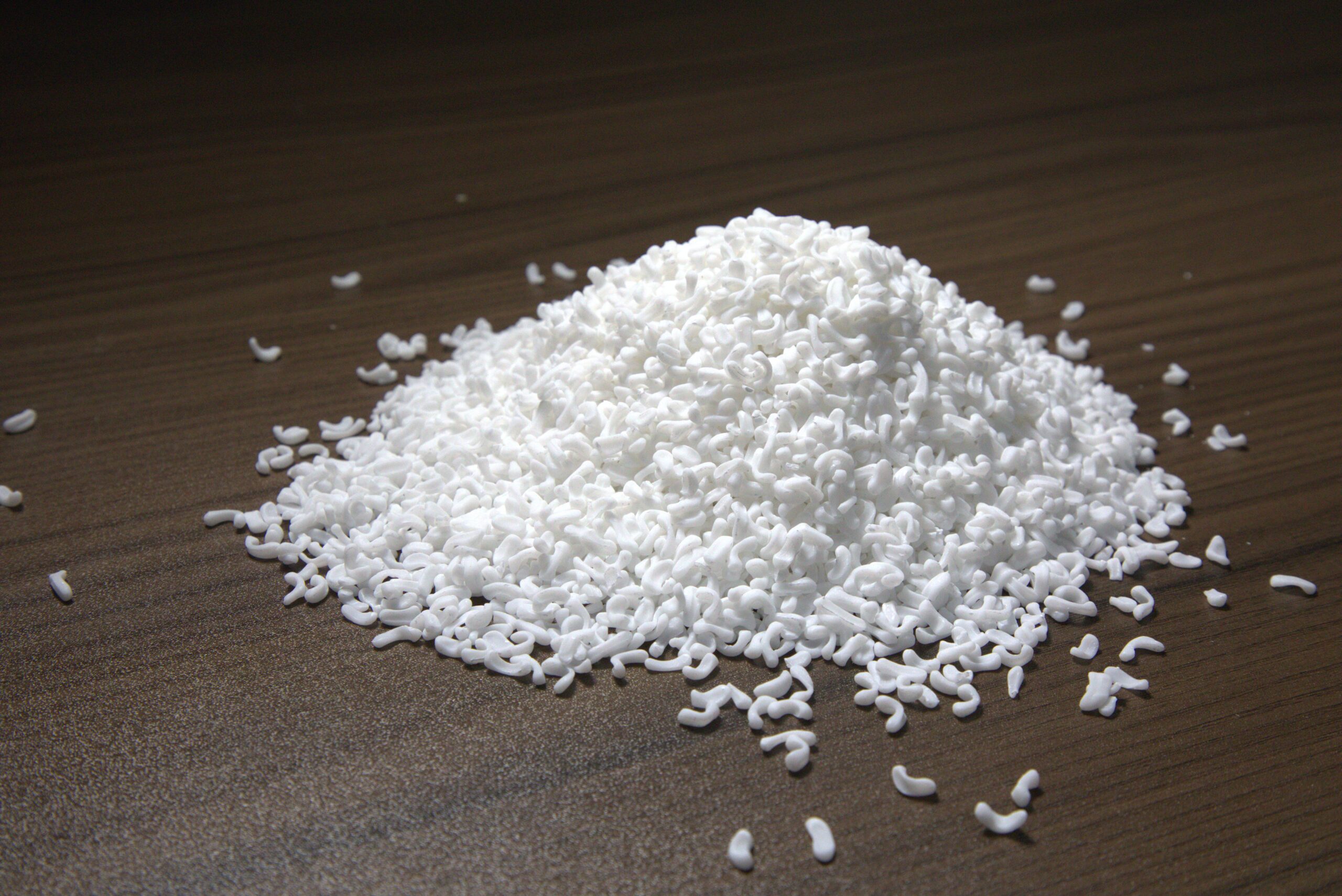
One of the most common questions we receive from new customers is: what addition rate should I start with? It seems like a simple question, but the honest answer is that there is no universal starting point. The right addition rate depends on your film specification, your line configuration, your raw material costs, and what your end customer will accept.
This guide outlines the key variables and gives practical starting points for our T60, N95 and NANO100 grades.
The Core Trade-Off
Adding filler masterbatch reduces raw material cost by replacing virgin PE or PP with a lower-cost mineral. But above a certain threshold, mechanical properties begin to degrade. The skill is finding the addition rate that maximises cost saving while keeping film performance within acceptable limits.
The relationship between addition rate and property change is not linear. In our experience, the first 15–20% addition typically has minimal impact on tensile strength and elongation. From 20–35%, you start to see measurable changes. Above 40–50%, the effect becomes significant and requires careful process adjustment.
Film Thickness Matters
Thicker films are more tolerant of filler. A 50-micron garbage bag can typically run at 30–40% filler content without customer complaints about bag strength. A 15-micron food packaging film running at 30% filler will likely fail seal integrity or puncture resistance requirements.
As a general rule: reduce your starting addition rate by roughly 5 percentage points for every 10 microns reduction in target film thickness below 40 microns.
Starting Points by Grade
- T60 — Start at 15–20% for thin films (under 25μm), 25–35% for standard films (25–50μm), up to 45–50% for heavy-duty films (over 50μm) or non-woven applications.
- N95 — Similar starting points to T60, but the finer particle size (2.5μm laser) allows slightly higher loading in transparent applications.
- NANO100 — The nano modification improves strength retention, so you can often run 5–8% higher addition rates compared to T60. Good starting point: 20% for thin film, 30–40% for standard applications.
Process Considerations
Higher filler content increases melt density and can affect bubble stability in blown film. If you see bubble oscillation or uneven gauge when increasing addition rates, try reducing line speed by 5–10% before adjusting temperature profiles.
Die gap may need adjustment if you are moving from unfilled to 30%+ filler content. A die temperature increase of 5–10°C often resolves streaking without needing mechanical adjustment.
Running Trials
We recommend starting at the lower end of the range and increasing in 5% increments, testing tensile strength, elongation at break and haze at each step. If you would like technical support for your specific application, contact us via WhatsApp with your film specification.