


10 Questions to Ask a Sodium Sulfate Filler Masterbatch Supplier
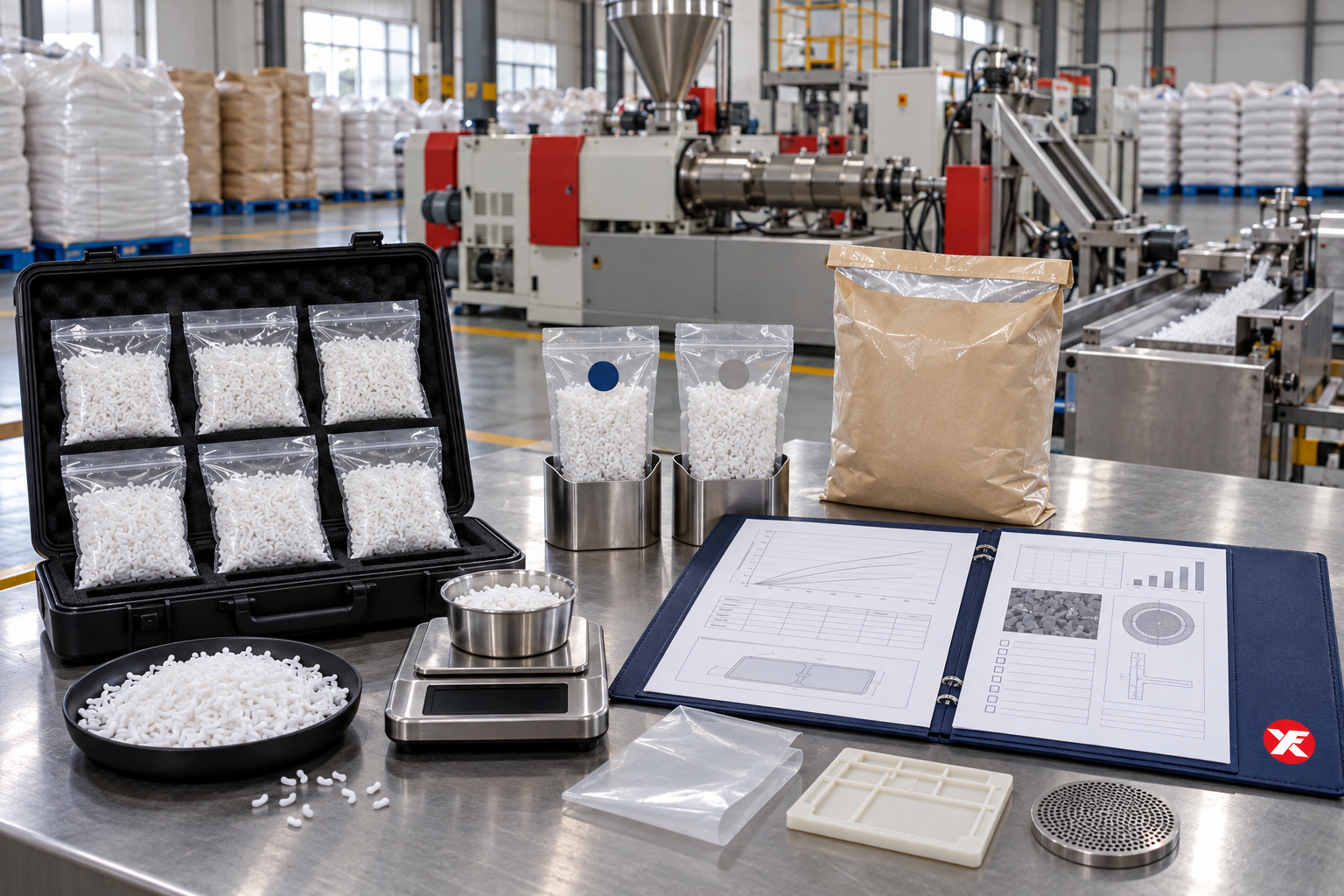
Selecting a sodium sulfate filler masterbatch supplier involves more than comparing prices.
The masterbatch must be compatible with the customer’s resin, equipment and finished-product requirements. Poor product selection may result in white spots, unstable extrusion, weak seals, excessive screen changes or higher rejection rates.
Before placing a bulk order, ask the supplier the following ten questions.
1. What Applications Is the Grade Designed For?
Not every filler masterbatch is suitable for every plastic process.
Ask whether the recommended grade is intended for:
– PE blown film
– T-shirt bags
– Shopping bags
– Garbage bags
– Courier bags
– Construction film
– PP injection moulding
– Other plastic products
A grade developed for thick, opaque film may not perform well in thin or transparent packaging.
Provide the supplier with the exact application rather than asking only for a general filler masterbatch.
2. What Carrier Resin Does the Masterbatch Use?
Carrier compatibility affects melting, mixing and filler dispersion.
The supplier should understand whether the customer is processing:
– HDPE
– LDPE
– LLDPE
– PP
– Virgin resin
– Recycled material
– Mixed formulations
A masterbatch intended for PE should not automatically be used in PP injection moulding without evaluation.
Poor carrier compatibility may cause rough surfaces, weak products, unstable feeding or incomplete dispersion.
3. What Information Is Needed to Recommend a Grade?
A reliable supplier should request application details before making a recommendation.
Useful information includes:
– Resin grades
– Virgin and recycled material ratio
– Film thickness
– Bag dimensions
– Finished-product weight
– Processing equipment
– Required transparency
– Mechanical requirements
– Current formulation
– Target cost reduction
If a supplier recommends the same product and dosage for every customer without reviewing the application, further testing is necessary.
4. What Is the Recommended Starting Dosage?
The supplier should provide a practical starting point, not only the maximum possible addition ratio.
The suitable dosage depends on:
– Film thickness
– Resin formulation
– Product structure
– Required transparency
– Sealing performance
– Impact or tear requirements
– Recycled-material quality
Begin conservatively and increase the dosage gradually.
The highest filler percentage is not always the most economical if it increases product weight, rejection or downtime.
5. Can the Supplier Provide a Sample for Testing?
A production trial is more reliable than evaluating specifications alone.
Before bulk purchasing, request a representative sample and test it with the actual:
– Resin formulation
– Equipment
– Screen pack
– Processing temperature
– Film thickness
– Printing process
– Bag-conversion process
The trial should continue until the machine reaches stable production.
Keep samples from the trial for comparison with future deliveries.
6. How Is Batch Consistency Controlled?
Ask how the manufacturer controls variation between production batches.
Relevant areas may include:
– Raw-material inspection
– Formulation control
– Mixing
– Extrusion
– Pellet cutting
– Moisture protection
– Packaging
– Batch identification
– Retained samples
The supplier should be able to trace a delivered product to its production batch.
Consistent quality helps customers maintain stable machine settings and finished-product performance.
7. How Should the Product Be Stored?
Sodium sulfate filler masterbatch should be protected from moisture during transport and storage.
Ask the supplier about:
– Packaging structure
– Inner liners
– Storage conditions
– Shelf-life guidance
– Handling opened bags
– Drying recommendations
– Humidity precautions
Material should generally remain sealed and stored in a dry warehouse on raised pallets.
Drying conditions should be confirmed with the supplier because excessive temperature may soften the pellets or affect feeding.
8. Which Processing Problems Can the Supplier Help Troubleshoot?
Technical support is important when the material is introduced into production.
Ask whether the supplier can help analyse:
– White spots
– Poor dispersion
– Film bubbles
– Pinholes
– Unstable film bubbles
– Screen blockage
– Die buildup
– Weak sealing
– Reduced transparency
– Brittle injection products
Effective troubleshooting requires production data. A supplier may request photographs, videos, formulations and machine settings before recommending adjustments.
9. Which Quality Documents Are Available?
The required documentation depends on the application and market.
Ask whether the supplier can provide appropriate documents such as:
– Product specification
– Technical data
– Safety data sheet
– Certificate of analysis
– Batch information
– Storage instructions
– Packaging information
If the finished product has regulatory or customer-specific requirements, clarify them before ordering.
Do not assume that a general-purpose filler masterbatch automatically meets every food-contact, medical or export requirement.
10. How Should the Real Cost Saving Be Calculated?
The supplier should help the customer evaluate more than the price difference between resin and masterbatch.
The calculation should include:
– Blended material cost
– Finished-product weight
– Bags or parts per kilogram
– Rejection rate
– Production output
– Screen-changing frequency
– Electricity consumption
– Printing waste
– Sealing failures
– Customer-quality requirements
The correct comparison is the cost per acceptable finished product.
A lower price per kilogram does not guarantee a lower manufacturing cost.
Additional Questions for PE Blown Film
PE film manufacturers should also ask:
– Will the grade affect transparency?
– How should film thickness be monitored?
– Is it suitable for printing?
– Does the sealing temperature require adjustment?
– How should white spots be investigated?
– Can it be used with recycled PE?
– Which film applications are unsuitable?
Thin film normally requires stricter control than thick or opaque products.
Additional Questions for PP Injection Moulding
PP processors should confirm:
– Carrier compatibility
– Mould-filling behaviour
– Surface appearance
– Product shrinkage
– Impact-performance changes
– Cycle-time effects
– Suitability for thin-wall parts
The masterbatch should be tested in the actual mould because product design strongly affects the result.
Warning Signs When Selecting a Supplier
Proceed carefully if a supplier:
– Guarantees one dosage for every application
– Recommends bulk purchasing without a sample trial
– Cannot identify production batches
– Provides no storage guidance
– Ignores the customer’s resin formulation
– Promises cost savings without discussing product weight
– Cannot provide basic technical information
– Attributes every production problem to the customer’s machine
A responsible supplier should explain both the potential benefits and the application limitations.
Information to Send with Your Enquiry
To receive a useful quotation and recommendation, include:
– Company and country
– Product application
– Resin formulation
– Film thickness or part weight
– Current additive dosage
– Monthly requirement
– Required packaging
– Target port
– Current production problems
– Photos or samples when available
This information reduces unnecessary communication and helps the manufacturer select a relevant grade.
Why Sample Testing Matters
Two factories producing similar bags may use different equipment, resin and processing settings.
Sample testing helps confirm:
– Feeding stability
– Dispersion
– Extrusion pressure
– Film appearance
– Sealing strength
– Mechanical performance
– Finished-product weight
– Real production cost
The final purchasing decision should be based on stable production results, not only laboratory data or price.
Conclusion
A reliable sodium sulfate filler masterbatch supplier should understand the customer’s application, support sample testing and maintain traceable batch control.
Before placing a bulk order, confirm carrier compatibility, dosage, storage, documentation and technical support. Most importantly, evaluate the masterbatch according to the cost and quality of the finished product.
Xinfeng manufactures sodium sulfate filler masterbatch for selected PE blown-film and PP processing applications. We support application review, sample preparation and production-trial communication.
To discuss your requirements, visit Xinfeng Masterbatch.
Send us a message now for quotation.
WhatsApp: https://wa.memessage/IRZROGA5F2RQO1
WhatsApp:+86 17835035161