


NANO100 Nano-Modified Filler Masterbatch: Enhanced Strength and Transparency
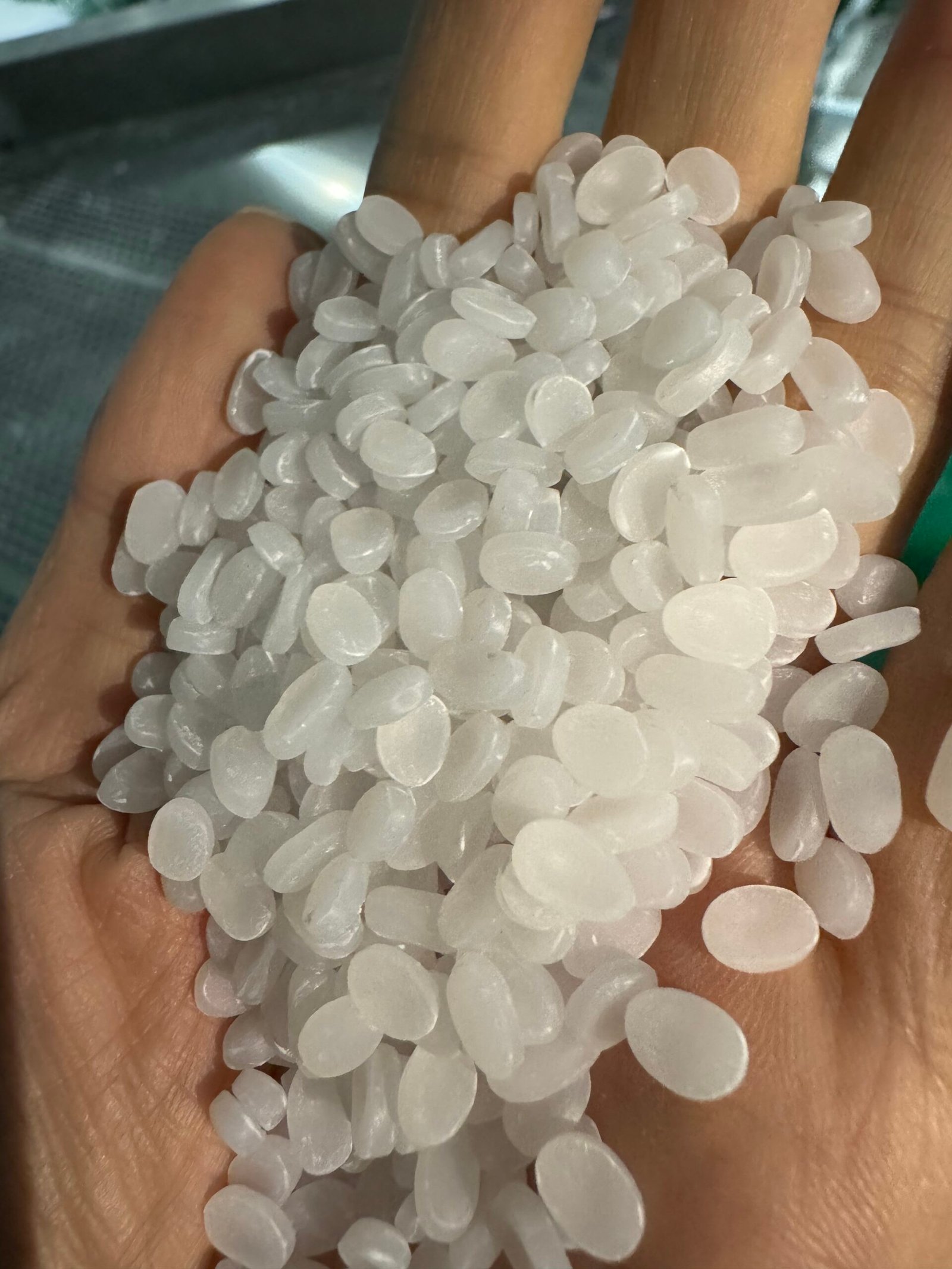
When we developed the NANO100 grade, the brief from our technical team was straightforward: take the cost-reduction benefits of standard sodium sulfate filler masterbatch and add a meaningful improvement in mechanical properties, without sacrificing the optical clarity that makes transparent filler grades useful in the first place.
The result is a product that uses nano-modified sodium sulfate particles with a tighter size distribution and a specific surface treatment that improves compatibility with polyethylene and polypropylene matrices.
What the Nano Modification Does
Conventional filler masterbatch relies on ultra-fine sodium sulfate (Na₂SO₄) as the active filler. Particle size is critical — coarser particles create visible haze and weak points in thin films, while finer particles disperse more uniformly and have less impact on optical properties.
NANO100 takes this further by treating the particle surface to improve wetting with the polymer melt. The result is more uniform distribution at the microscopic level, which translates to better tensile strength retention at the same addition rate compared to standard grades.
In our laboratory testing on 25-micron blown PE film at a 30% addition rate, NANO100 showed approximately 12% higher dart impact resistance compared to T60 at the same loading level. Haze values were within 2 percentage points.
Formulation
- Na₂SO₄ content: 61%
- Polyethylene: 33%
- Vinyl wax: 2.5%
- Stearic acid: 2.5%
- Additive package: 1%
The lower filler loading compared to T60 (80%) and N95 (75%) is intentional — the nano modification improves efficiency, so a lower mineral content delivers comparable performance to higher-loaded standard grades.
Recommended Applications
NANO100 is particularly suited to applications where both cost reduction and mechanical performance matter. Agricultural greenhouse film, heavy-duty sacks, and multilayer co-extruded packaging films are the most common uses we see among our customers.
Addition rates of 10–35% are typical. At rates above 40%, the reduction in virgin resin content can start to affect tear resistance in thinner gauges, so testing at your specific line conditions is always recommended before full-scale production.