


R-Series Toughening Agent: Improving Impact Resistance in PP Injection Moulding
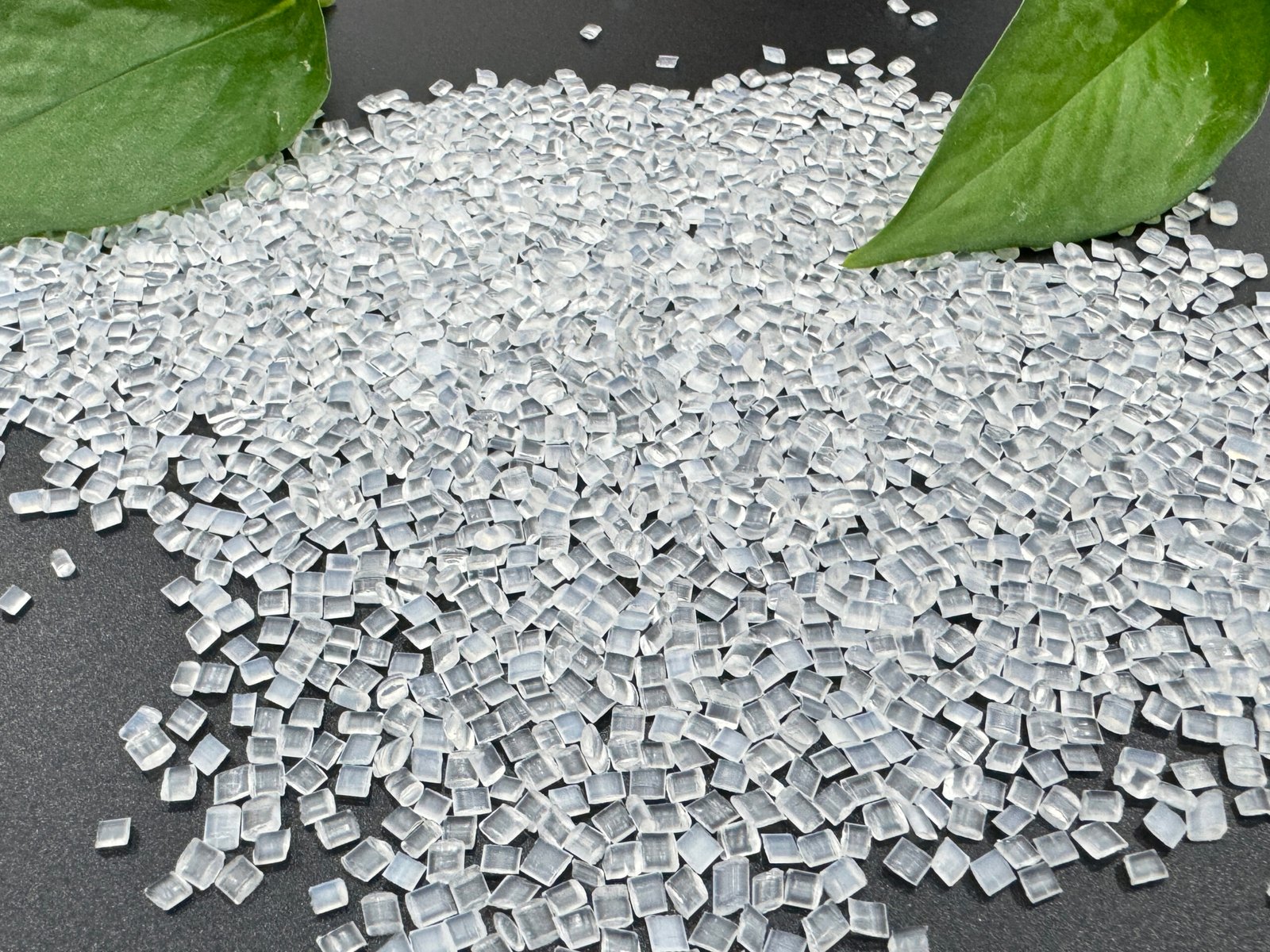
Polypropylene is one of the most widely used polymers in injection moulding — it is stiff, heat-resistant, chemical-resistant and relatively low cost. The one area where it falls short is low-temperature impact resistance. Unfilled PP becomes brittle below about 0°C, which limits its use in applications that require toughness across a range of temperatures.
Toughening agents address this by introducing a rubbery dispersed phase within the PP matrix that absorbs impact energy. Our R-series masterbatch takes this approach in a concentrated, easy-to-disperse pellet form.
The R-Series Range
- R-1 — General purpose, suitable for most PP injection moulding applications. Addition rate 10–20%.
- R-2 — Higher toughener concentration, for applications requiring more significant impact improvement. Addition rate 8–15%.
- R-3 — PE carrier variant, better compatibility in PE/PP blends. Addition rate 10–25%.
- R-4 — Optimised for blow moulding applications. Addition rate 10–20%.
Typical Performance
At a 15% addition rate of R-1 in homopolymer PP, we typically see notched Izod impact strength increase by 40–80% at 23°C and 100–200% at -10°C. Tensile modulus decreases by approximately 10–15% at these loading levels — the expected trade-off between stiffness and toughness.
Melt flow index of the compound will change with addition of R-series. This should be accounted for in processing parameter settings, particularly injection speed and back pressure.
Common Applications
Automotive interior components, appliance housings, food containers, crates and bins, outdoor furniture, and pipe fittings are the most common applications where our customers use R-series tougheners.
If you are evaluating a toughening agent for a specific application, we recommend requesting a sample and running trials at 10%, 15% and 20% addition rates to identify the optimum balance for your part geometry and wall thickness.