


How to Test Sodium Sulfate Filler Masterbatch Before Bulk Purchase
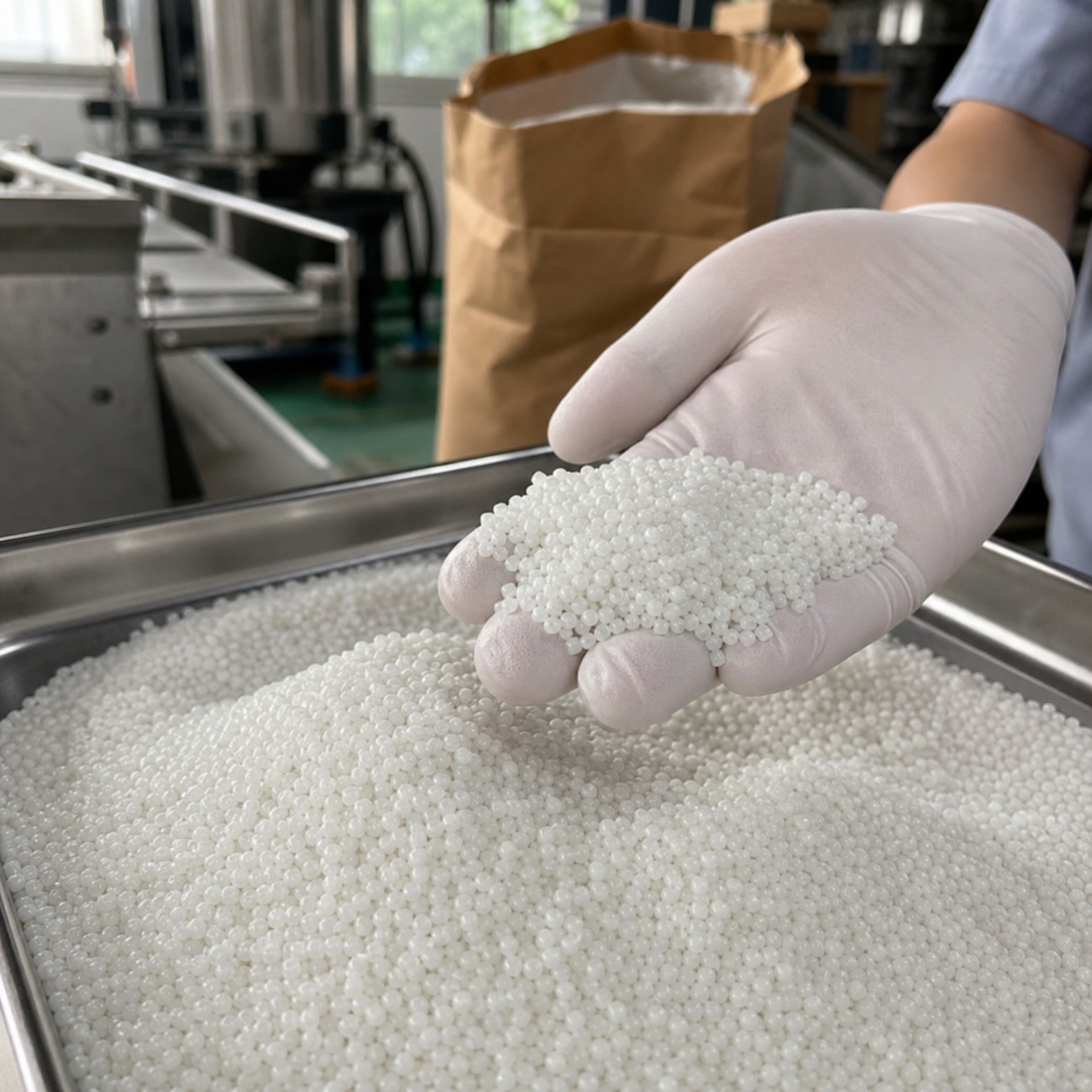
A sodium sulfate filler masterbatch sample may look clean and uniform, but granule appearance alone cannot confirm whether it is suitable for your production.
The real value of a filler masterbatch depends on how it mixes with the base resin, runs on the production equipment and affects the finished product. A reliable evaluation should therefore include raw-material inspection, a controlled machine trial, finished-product testing and cost analysis.
This guide explains how PE blown-film and PP injection-molding manufacturers can test sodium sulfate filler masterbatch before placing a bulk order.
What Is Sodium Sulfate Filler Masterbatch?
Sodium sulfate filler masterbatch is a functional plastic additive made from finely processed sodium sulfate, a compatible carrier resin and selected processing additives.
It is also referred to as:
Na2SO4 filler masterbatch
Sodium sulfate filling masterbatch
Sodium sulfate transparent filler masterbatch
Plastic cost-reduction masterbatch
Functional filler masterbatch
In a suitable formulation, it can replace a controlled portion of virgin or recycled resin to help reduce raw-material costs.
However, different grades may use different carrier systems and formulations. A sample should always be tested with the customer’s actual polymer and processing method.
Why Is Sample Testing Necessary?
The same masterbatch may produce different results in two factories because of differences in:
Base resin
Recycled-material content
Film or part thickness
Screw design
Mixing capability
Processing temperature
Production speed
Finished-product requirements
Other additives
A general laboratory result cannot fully predict performance on every production line.
A controlled sample trial helps answer four important questions:
Is the masterbatch compatible with the resin?
Does it process consistently on the equipment?
Does the finished product meet the required standard?
Does it reduce the real cost per qualified product?
Information to Provide Before Requesting a Sample
A supplier can recommend a more suitable grade when the buyer provides complete application information.
Send:
Base resin type and grade
Virgin and recycled resin percentages
Complete current formulation
Processing method
Film thickness or molded-part dimensions
Finished-product application
Required transparency or color
Mechanical-performance requirements
Current processing temperature
Target addition ratio
Current production problem
Target cost reduction
Photos or physical samples of the finished product can also help the supplier understand the application.
1. Inspect the Packaging and Label
Begin the evaluation before opening the bag.
Check:
Product name and grade
Batch number
Net weight
Production identification
Packaging condition
Signs of moisture
Torn or punctured areas
Contamination
Record the batch number used in the trial. If a problem occurs, this makes communication and traceability easier.
Do not use visibly wet or seriously damaged material without evaluating its condition.
2. Examine the Granules
After opening the sample, visually inspect the masterbatch.
Look for:
Reasonably uniform granule size
Consistent appearance
Normal material flow
Excessive powder
Foreign particles
Serious clumping
Unusual discoloration
Signs of contamination
Uniform-looking granules are helpful for feeding and mixing, but appearance does not prove good dispersion or application performance.
Machine and finished-product tests are still required.
3. Check the Supplier’s Product Information
Request technical information relevant to the grade, such as:
Recommended polymer system
Carrier-resin type
Suggested applications
Recommended starting dosage
Storage instructions
Processing guidance
Packaging specification
Available test documents
Do not assume that a grade suitable for PE blown film is automatically suitable for PP injection molding.
If compliance documents are required for a specific market or application, confirm that the documents apply to the exact product grade being purchased.
4. Prepare a Controlled Trial Formula
Testing is most useful when the original and trial formulas can be compared fairly.
Before production, record the original formula, including:
PE or PP resin
Recycled material
Color masterbatch
Toughening additive
Antiblock additive
Desiccant masterbatch
Other functional additives
Prepare the trial using accurately weighed materials. Avoid estimating percentages by volume or visual judgment.
During the initial trial, change only the sodium sulfate filler masterbatch ratio where possible. Multiple simultaneous changes make the result difficult to interpret.
5. Start at a Conservative Dosage
Begin with the supplier’s recommended starting ratio instead of immediately testing the highest possible dosage.
A conservative trial helps establish:
Compatibility
Dispersion
Processing stability
Optical effects
Mechanical-property changes
If the first trial passes, increase the dosage gradually and record the result at each level.
The practical dosage is the highest tested ratio that continues to meet processing, finished-product and economic requirements—not the highest ratio advertised by a supplier.
6. Evaluate Mixing and Feeding
Observe how the masterbatch behaves before entering the plasticizing section.
Check:
Mixing uniformity
Granule separation
Hopper flow
Bridging
Feeding consistency
Dust generation
Metering accuracy
Uneven feeding can produce continuous variations in filler content. This may lead to changing film strength, part weight, color or surface appearance.
For regular production, use suitable dosing and mixing equipment whenever possible.
7. Observe Processing Stability
For PE Blown Film
Record:
Extrusion pressure
Motor load
Melt behavior
Film-bubble stability
Frost-line position
Film-width stability
Thickness uniformity
Output per hour
Die deposits
Screen-changing frequency
For PP Injection Molding
Record:
Material feeding
Plasticizing behavior
Injection pressure
Mold filling
Mold release
Cycle time
Deposits
Surface defects
Rejection rate
The line should run long enough to reveal gradual deposits or instability. A few acceptable minutes of production may not represent continuous manufacturing performance.
8. Test Dispersion in the Finished Product
Poor dispersion may appear as:
White spots
Visible particles
Rough surfaces
Weak areas
Uneven gloss
Film defects
Inconsistent color
For transparent or translucent film, inspect the product under consistent lighting. Compare the original and trial samples at the same thickness.
For injection-molded products, examine both large flat surfaces and thin sections where defects may be easier to see.
If visible particles appear, review the masterbatch grade, carrier compatibility, processing temperature, mixing and machine cleanliness.
9. Measure Optical and Surface Changes
Where appearance matters, evaluate:
Transparency
Haze
Gloss
Color
Surface smoothness
Visible particles
Printing appearance
Sodium sulfate filler masterbatch should not be described as completely invisible in every formulation.
The optical result depends on dosage, resin, dispersion and product thickness. All comparison samples should therefore have similar dimensions.
If color masterbatch is used, evaluate the final shade using the complete production formula.
10. Test Mechanical Performance
Finished products must pass the tests required by their actual use.
For PE blown film, possible tests include:
Tensile strength
Elongation
Tear resistance
Puncture resistance
Heat-sealing strength
Drop test
Bag load test
For PP injection molding, possible tests include:
Impact strength
Flexibility
Drop resistance
Load-bearing capacity
Dimensional stability
Assembly performance
Hinge or clip testing, where applicable
Visual inspection cannot replace mechanical testing.
A film may appear smooth but fail during bag making. A molded part may look acceptable but crack during assembly or transport.
11. Measure Product Weight and Dimensions
Because filler changes the formulation, finished-product weight and dimensional behavior should be monitored.
Measure:
Film thickness
Weight per meter
Bag weight
Roll weight
Molded-part weight
Shrinkage
Warpage
Critical dimensions
Take several samples and calculate an average.
If the material cost per kilogram decreases but every finished product becomes heavier, the real saving may be lower than expected.
12. Evaluate Heat Sealing and Printing
For PE packaging and bags, downstream processing is part of the masterbatch evaluation.
Check:
Heat-sealing temperature range
Seal strength
Cutting performance
Bag-making speed
Printing adhesion
Ink appearance
Surface consistency
Test on the actual bag-making and printing equipment whenever possible.
A formula should not be approved based only on stable extrusion if the finished bag cannot meet sealing or printing requirements.
13. Calculate the Cost per Qualified Product
After the technical evaluation, calculate the economic result.
Include:
Resin cost
Sodium sulfate masterbatch cost
Other additive costs
Finished-product weight
Production speed
Scrap rate
Energy consumption
Cleaning downtime
Qualified output
Use:
Cost per qualified product = total production cost ÷ qualified production quantity
This is more meaningful than comparing only the price per ton.
A cheaper masterbatch may be less economical if it increases scrap, downtime or product weight.
14. Repeat the Trial with a Commercial Batch
A small sample confirms initial suitability, but it does not fully demonstrate long-term batch consistency.
Before establishing regular purchasing, buyers may consider:
Testing a larger quantity
Running a longer production trial
Comparing more than one production batch
Recording changes in process settings
Retaining reference samples
Establishing incoming inspection standards
The approved commercial product should match the tested grade and specification.
Keep production samples and photographs together with the trial record.
Common Testing Mistakes
Testing Different Film Thicknesses
Optical and mechanical comparisons are unreliable when the original and trial films have different thicknesses.
Changing Several Materials at Once
Changing the filler, recycled-resin source and toughener simultaneously makes it difficult to identify which change produced the result.
Running the Machine for Too Short a Time
Some deposits and stability problems appear only during longer production.
Approving Material by Appearance Alone
Finished products must pass mechanical, sealing, dimensional or assembly tests.
Ignoring Scrap and Downtime
These factors directly affect the actual saving.
Using an Unstable Recycled-Resin Batch
Inconsistent recycled material can conceal or exaggerate the effect of the masterbatch.
Sample Acceptance Checklist
Before approving a bulk purchase, confirm:
The grade is compatible with the base resin
Feeding and mixing are stable
Dispersion is acceptable
Production remains stable
Appearance meets the target
Mechanical properties pass
Sealing, printing or assembly passes
Product weight remains controlled
Scrap is acceptable
Cost per qualified product is lower
Packaging and batch information are adequate
Approval should be based on documented results rather than memory or visual impressions.
Work with Xinfeng
Xinfeng manufactures sodium sulfate filler masterbatch for PE blown film, PP injection molding and other suitable plastic-processing applications.
We also supply:
High-transparency toughening additives
Color masterbatch
Antiblock masterbatch
Desiccant masterbatch
Other plastic functional additives
We recommend conducting a controlled production trial before a bulk order. Send us your resin system, current formulation, finished-product requirements and target cost so we can recommend a suitable grade and starting dosage.
Frequently Asked Questions
Can masterbatch quality be judged from the granules?
Granule appearance is only an initial reference. Compatibility, dispersion, processing and finished-product performance must also be tested.
How much sample is needed?
The required quantity depends on the machine, mixing method and minimum stable production run. Provide your equipment information so the supplier can discuss a practical trial quantity.
Should I test the highest recommended dosage first?
No. Begin with a conservative starting ratio and increase it gradually after the first trial passes.
How long should a production trial run?
It should be long enough to evaluate stable feeding, processing, deposits, finished-product quality and scrap. A very short visual test may be misleading.
Which tests are important for PE blown film?
Common checks include bubble stability, thickness, haze, tensile strength, elongation, tear resistance and heat-sealing strength.
Which tests are important for PP injection molding?
Check filling behavior, surface appearance, part weight, dimensions, impact strength, warpage and actual-use performance.
How should two suppliers be compared?
Use the same resin, formula, dosage, equipment and quality standard. Compare the cost per qualified finished product.
Request a Production-Test Sample
Send Xinfeng your:
Base resin and grade
Current formulation
Processing method
Film thickness or part dimensions
Finished-product application
Required performance
Target dosage and cost reduction
We can recommend a suitable sodium sulfate filler masterbatch for your production trial.
Send us a message now for quotation.
WhatsApp: https://wa.memessage/IRZROGA5F2RQO1
WhatsApp:+86 17835035161