


How to Use Sodium Sulfate Filler Masterbatch in Recycled PE Film
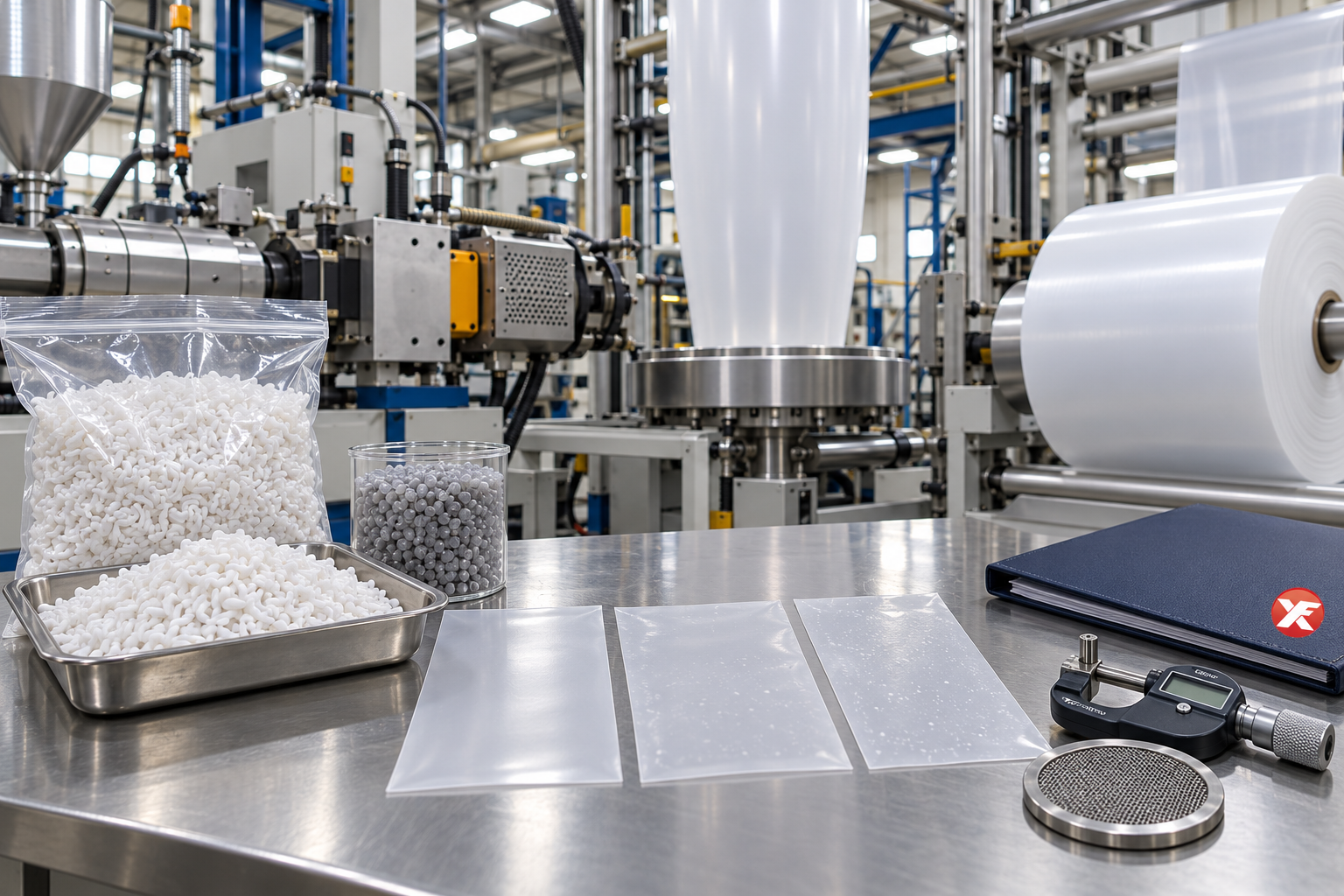
Recycled polyethylene is widely used in refuse bags, industrial liners, protective packaging and other cost-sensitive film products.
To further optimize formulation costs and processing performance, manufacturers may consider adding sodium sulfate filler masterbatch. However, recycled PE is generally more variable than virgin resin. Its composition, melt flow, contamination level, moisture and previous processing history may change from batch to batch.
For this reason, sodium sulfate filler masterbatch should not be added according to a single fixed formula. The recycled material must first be evaluated, after which the filler dosage and processing conditions can be established through controlled production trials.
Why Is Recycled PE More Difficult to Control?
Virgin PE resin is normally supplied according to defined specifications. Recycled PE may contain material collected from different products, suppliers or processing streams.
Variations can include:
– Different proportions of LDPE, LLDPE and HDPE
– Unknown additives and pigments
– PP or other polymer contamination
– Paper, dust, metal or adhesive residue
– Different melt-flow characteristics
– Moisture
– Odor
– Thermal or mechanical degradation
– Inconsistent pellet size and bulk density
Research on recycled PE films shows that contaminants and repeated processing can significantly affect optical, mechanical and processing properties. Non-melting contaminants are particularly problematic in blown film because they can form weak points and cause the film bubble to tear. Technical limits in plastic-package circularity
These variations should be understood before additional filler is introduced.
Test Each New Batch of Recycled Material
Two batches of recycled PE with a similar color may behave differently during extrusion.
Before changing the filler dosage, manufacturers should examine the recycled resin for:
– Pellet color
– Pellet size
– Odor
– Visible contamination
– Moisture
– Melt flow
– Ash content, if testing is available
– Existing filler content
– Film-forming stability
– Tensile and elongation performance
A small blown-film test can provide valuable information about bubble stability, filter pressure, film appearance and mechanical properties.
If the recycled material already contains a high amount of mineral filler, adding more filler masterbatch without testing may produce an excessively stiff or weak film.
Recycled PE and Filler Masterbatch Perform Different Roles
Recycled PE supplies the main polymer matrix. Sodium sulfate filler masterbatch introduces a controlled functional inorganic component through a compatible polymer carrier.
The filler masterbatch may help suitable formulations:
– Optimize raw-material costs
– Adjust film stiffness and handling
– Improve pellet feeding compared with direct powder addition
– Support more consistent formulation control
– Reduce dependence on part of the base resin
However, filler masterbatch cannot remove contamination or restore severely degraded recycled resin.
If the recycled PE has poor melt strength, incompatible polymers or excessive dirt, these problems must be addressed separately. Adding more filler is not a substitute for raw-material quality control.
Confirm Carrier Compatibility
The carrier of the sodium sulfate filler masterbatch should be compatible with the recycled PE formulation.
For example, a recycled stream containing mainly LDPE and LLDPE may behave differently from one containing a high proportion of HDPE or PP.
Poor compatibility may contribute to:
– Uneven dispersion
– White spots
– Surface roughness
– Reduced elongation
– Unstable bubble formation
– Increased film defects
– Weak sealing performance
Provide the masterbatch supplier with information about the recycled resin’s source, approximate composition, melt-flow characteristics and intended application.
Pay Attention to Existing Filler Content
Some recycled PE pellets already contain mineral fillers from their original products. Their appearance alone does not reveal the total inorganic content.
Where possible, an ash-content test can help estimate how much non-combustible material is already present.
This information is useful because the total filler content in the finished film includes:
– Filler already present in the recycled PE
– Filler introduced through the new masterbatch
– Pigments and other inorganic additives
– Contamination that may remain in the recycled stream
The dosage decision should therefore be based on the complete formulation, not just the amount of newly added masterbatch.
Control Contamination and Melt Filtration
Film blowing is sensitive to non-melting particles. Paper fibers, aluminum, wood, sand, cross-linked polymer and high-melting plastic contamination can create fish eyes, gels, pinholes and bubble tears.
Melt filtration helps remove some solid contamination before the material enters the die. Nevertheless, filtration should be monitored carefully because contaminated recycled material can rapidly increase screen pressure.
Record:
– Initial screen pressure
– Pressure change over time
– Screen-changing frequency
– Extrusion output
– Motor load
– Die buildup
– Number of visible film defects
A rapidly rising pressure may indicate excessive contamination, unsuitable screen selection or poor material preparation.
Recent research also notes that recycled film streams can create fish eyes, specks, die buildup and unstable film formation because of mixed polymers, contaminants, moisture and variations in melt behavior. Review of defects in blown polymer films
Keep Moisture Under Control
Moisture can contribute to bubbles, surface defects and unstable extrusion.
Recycled material is especially vulnerable when it has been washed, stored outdoors or packed before completely cooling and drying.
Recommended controls include:
– Store materials in a dry, covered area.
– Keep bags closed until production.
– Check for condensation.
– Avoid placing material directly on a damp floor.
– Follow the supplier’s drying recommendations where applicable.
– Clean the mixer, hopper and conveying lines before testing.
If moisture and filler dosage are changed at the same time, it may be difficult to identify the real cause of a defect.
Begin with a Conservative Trial
Because recycled PE quality varies, the filler masterbatch should be introduced gradually.
A practical trial sequence is:
1. Produce film using the current recycled PE formulation.
2. Record the stable processing parameters.
3. Measure the reference film’s thickness and mechanical properties.
4. Add the sodium sulfate filler masterbatch at a conservative trial level.
5. Keep other additives unchanged.
6. Monitor extrusion pressure, output and bubble stability.
7. Inspect the film for fish eyes, pinholes and white spots.
8. Test tensile strength, elongation, tear and impact performance.
9. Produce finished bags and test their seals and load capacity.
10. Increase the filler level only after the previous trial passes.
This approach makes it easier to distinguish the effect of the filler masterbatch from natural variation in the recycled resin.
Maintain Accurate Mixing
Recycled PE and filler masterbatch may have different pellet shapes, sizes and bulk densities. Poor mixing or material separation can create an uneven filler concentration.
Use accurate weighing rather than estimating with a scoop. Gravimetric feeding is preferable when consistent dosing is required.
Check that:
– Materials are mixed for a consistent time.
– Pellets do not separate during conveying.
– The hopper feed remains steady.
– Recycled material does not bridge inside the hopper.
– Additives are evenly distributed.
– The mixer is not overfilled.
Film samples should be checked at the beginning, middle and end of the production roll.
Monitor Film Appearance
Visual defects may indicate contamination, poor dispersion or unsuitable processing conditions.
Look for:
– Fish eyes
– Gels
– Pinholes
– Black spots
– White specks
– Die lines
– Uneven opacity
– Excessive haze
– Surface roughness
– Thickness variation
Not every defect comes from the filler masterbatch. Comparing the reference film with the trial formulation helps determine whether the defect was already present in the recycled PE.
Test Mechanical Performance
Recycled PE can have lower or less consistent ductility than virgin resin. Additional filler may further change stiffness, elongation and impact performance.
The following properties should be evaluated according to the finished product:
– Tensile strength in the machine direction
– Tensile strength in the transverse direction
– Elongation at break
– Tear strength
– Dart-drop impact
– Puncture resistance
– Heat-seal strength
– Finished-bag load capacity
Do not approve a formulation based only on how easily the film runs through the machine.
The film must remain suitable for filling, transportation, storage and customer use.
Evaluate Odor and Color Separately
Sodium sulfate filler masterbatch is not an odor-removal treatment. If the recycled PE has a strong smell, the source of the recycled material and its washing, drying and storage conditions should be investigated.
The filler may also change film opacity or perceived color. When producing black, gray or colored bags, the color masterbatch dosage may require adjustment after filler is introduced.
Compare samples under consistent lighting and retain an approved reference sample for future batches.
Check Heat Sealing and Bag Making
The new film should be tested on the actual bag-making equipment.
Inspect:
– Seal initiation
– Sealing-temperature window
– Seal appearance
– Bottom-seal strength
– Side-seal strength
– Handle punching
– Cutting quality
– Bag opening
– Leakage
– Load performance
A formulation that reduces resin cost but increases bag rejection, leakage or seal failure may not provide a real economic benefit.
Calculate Cost per Qualified Product
The correct comparison is not simply the raw-material price per kilogram.
Calculate the total cost of acceptable finished products, including:
– Recycled resin consumption
– Virgin resin used for reinforcement
– Filler masterbatch
– Color masterbatch
– Other additives
– Screen replacement
– Machine downtime
– Energy consumption
– Production speed
– Scrap rate
– Customer rejection risk
A slightly more conservative formulation may produce a lower total cost if it provides better stability and fewer defective bags.
Information to Give the Masterbatch Supplier
For a more suitable recommendation, provide:
– Source and type of recycled PE
– Approximate LDPE, LLDPE and HDPE content
– Known PP or other polymer content
– Melt-flow information
– Ash content, if available
– Current formulation
– Film thickness
– Finished-product application
– Required load and mechanical properties
– Extruder and screen configuration
– Photographs of film defects
– Current production problems
The supplier can then determine whether the masterbatch grade and proposed trial plan are appropriate.
Conclusion
Sodium sulfate filler masterbatch can be used in selected recycled PE blown-film applications, but recycled-resin variability makes quality control especially important.
Manufacturers should inspect each recycled-material batch, confirm existing filler content, control moisture and contamination, monitor melt-filter pressure and introduce the masterbatch gradually.
The best formulation is one that achieves a competitive material cost while maintaining stable extrusion, acceptable film strength, reliable heat sealing and a high finished-product qualification rate.
Xinfeng supplies sodium sulfate filler masterbatch for selected PE blown-film and plastic bag applications. Trial recommendations can be developed according to the recycled resin, equipment, film thickness and finished-product requirements.
For samples or technical consultation, visit Xinfeng Masterbatch.
Send us a message now for quotation.
WhatsApp: https://wa.memessage/IRZROGA5F2RQO1
WhatsApp:+86 17835035161