


Sodium Sulfate Filler Masterbatch vs Calcium Carbonate Filler Masterbatch
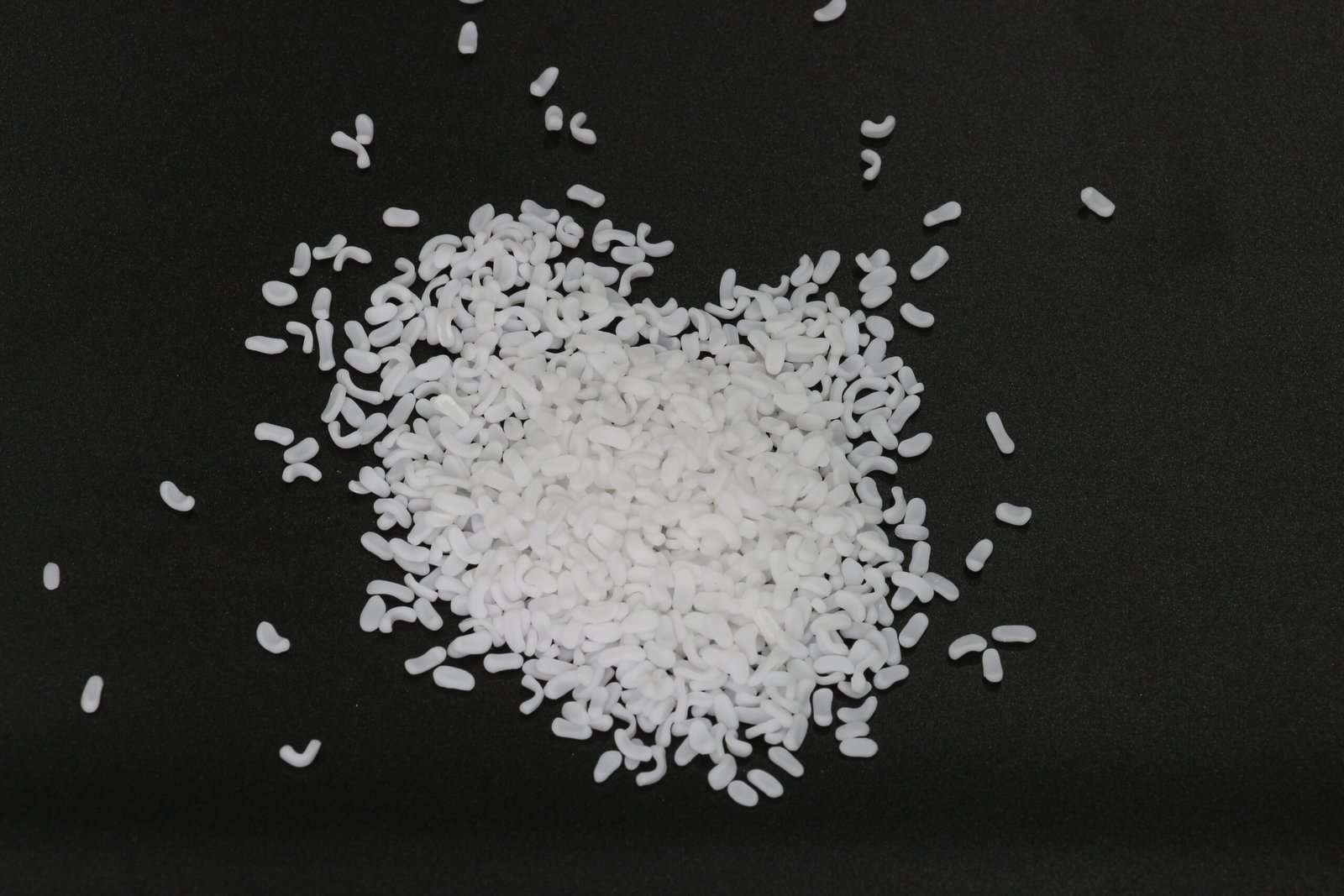
Filler masterbatch is widely used to reduce raw-material costs and modify the properties of plastic products. However, different fillers can produce very different results.
Transparent filler masterbatch and calcium carbonate filler masterbatch are two common options for PE and PP processing. Although both can partially replace virgin resin in suitable formulations, they differ in transparency, density, appearance and recommended applications.
Understanding these differences helps plastic manufacturers select a solution based on the finished product—not simply the lowest price per ton.
What Is Transparent Filler Masterbatch?
Transparent filler masterbatch is a functional compound generally made from finely processed inorganic filler, a compatible carrier resin and selected processing additives.
Sodium sulfate is one of the materials used in this type of masterbatch. It is therefore also called:
Sodium sulfate filler masterbatch
Na2SO4 filler masterbatch
Transparent filling masterbatch
Transparent additive masterbatch
The word “transparent” does not mean that the masterbatch will be completely invisible in every plastic product. The final optical result depends on several factors, including the resin, product thickness, filler dosage, dispersion and processing conditions.
Compared with conventional mineral fillers, a suitable transparent filler masterbatch can provide a better balance between cost reduction and product appearance in certain applications.
What Is Calcium Carbonate Filler Masterbatch?
Calcium carbonate filler masterbatch is made by compounding CaCO3 powder with a PE or PP carrier and other processing additives.
It is one of the most commonly used fillers in the plastics industry because calcium carbonate is widely available and economical. It may also increase rigidity and improve dimensional stability in suitable products.
Typical applications include:
Plastic bags
Woven sacks
Injection-molded household products
Plastic sheets
Pipes
General extrusion products
However, calcium carbonate can increase opacity and product density. These characteristics should be considered when transparency and output by piece count are important.
Key Differences Between the Two Masterbatches
1. Transparency and Appearance
Transparent filler masterbatch is generally selected when the manufacturer wants to reduce resin consumption while retaining a certain level of transparency or translucency.
Calcium carbonate filler masterbatch normally gives plastic products a whiter and more opaque appearance. Its influence becomes more noticeable as the addition ratio increases.
For clear, translucent or lightly colored film, sodium sulfate transparent filler masterbatch may be a more suitable starting point. For products where opacity is acceptable, calcium carbonate can be an economical option.
Actual results must be confirmed through production trials.
2. Product Density
Filler addition changes the density of a plastic formulation. This can affect the relationship between product weight and the number of finished pieces produced from one ton of material.
A lower material price per ton does not always mean a lower cost per bag, container or molded part. Manufacturers should calculate:
Finished-product weight
Output per ton
Scrap rate
Production speed
Energy consumption
Acceptable product rate
The most useful comparison is the cost per qualified finished product.
3. Mechanical Properties
Both types of filler masterbatch can influence tensile strength, elongation, impact strength and flexibility.
Calcium carbonate is frequently used when additional rigidity is useful. However, an excessive dosage may make thin plastic products more brittle.
Transparent filler masterbatch may be selected when the formulation needs to retain a better balance of appearance and flexibility. Its performance still depends on the grade and addition level.
Testing is especially important for thin film, shopping bags, heavy-duty bags and injection-molded parts exposed to impact.
4. Surface Finish
Filler particle size, surface treatment and dispersion influence the appearance of the finished product.
A properly formulated masterbatch can support:
Smooth material feeding
Uniform dispersion
Stable processing
Consistent surface appearance
Reduced visible particles
Poor-quality or incompatible masterbatch may cause rough surfaces, uneven color, deposits on equipment or unstable film bubbles.
Buyers should therefore consider production stability as well as the filler content.
5. Cost-Reduction Potential
Calcium carbonate filler masterbatch is often selected for economical filling because of its competitive material cost.
Transparent filler masterbatch may cost more per ton, but it can be valuable when the manufacturer wants to control costs without creating excessive opacity in suitable products.
The better choice depends on the total formulation result. The comparison should include:
Masterbatch price
Virgin resin replacement ratio
Finished-product weight
Rejected-product rate
Required transparency
Mechanical performance
Production efficiency
Which Masterbatch Is Better for PE Blown Film?
The answer depends on the type of film.
Transparent filler masterbatch may be considered for:
Translucent shopping bags
General packaging film
Garbage bags requiring a smoother appearance
PE bags where excessive whiteness is undesirable
Selected LDPE, LLDPE and HDPE film formulations
Calcium carbonate filler masterbatch may be suitable for:
Opaque plastic bags
White or colored film
Products where higher rigidity is acceptable
Applications focused primarily on economical filling
Film thickness has a significant effect on performance. A formulation that works in a thick bag may not be suitable for an ultra-thin film.
During a trial, manufacturers should check bubble stability, haze, tensile strength, elongation, sealing performance and film uniformity.
Which Masterbatch Is Better for PP Injection Molding?
Calcium carbonate filler masterbatch is commonly used in PP injection molding when opacity and rigidity are acceptable.
Transparent filler masterbatch may be considered for PP products that require a different balance between cost, appearance and toughness. However, compatibility between the masterbatch carrier and the base resin must be confirmed.
Before selecting a grade, provide the supplier with:
Type and melt flow rate of the PP resin
Finished-product wall thickness
Required color and transparency
Impact-strength requirement
Current production temperature
Target cost reduction
Existing formulation
This information helps the supplier recommend a suitable product and initial trial ratio.
Can the Two Fillers Be Used Together?
In some formulations, different functional fillers can be combined to achieve a particular balance of cost, appearance and mechanical properties.
However, combining fillers without proper testing may create problems such as poor dispersion, excessive density or reduced strength. The formula should be developed according to the finished product and processing equipment.
A small-scale trial is recommended before changing the full production formula.
How to Make the Right Choice
Choose transparent filler masterbatch when:
Transparency or translucency is important
Excessive whiteness is not acceptable
You need a balance between resin replacement and appearance
The application is suitable for sodium sulfate-based filling
Choose calcium carbonate filler masterbatch when:
Opacity is acceptable
Increased rigidity is useful
Economical mineral filling is the main goal
The finished product does not require a transparent appearance
Neither material is automatically better for every application. The right solution is the one that provides the lowest cost per qualified finished product while meeting the required performance.
Work With a Functional Masterbatch Manufacturer
Xinfeng manufactures functional plastic additives for PE blown film, PP injection molding and other plastic-processing applications.
Our product range includes:
Sodium sulfate transparent filler masterbatch
High-transparency toughening additives
Color masterbatch
Antiblock additives
Desiccant masterbatch
Other plastic functional additives
We help customers select products according to their resin, production process, finished-product requirements and target cost.
Send us your current formulation, product sample or application information. Our team can recommend a suitable grade and starting ratio for production testing.
Frequently Asked Questions
Is transparent filler masterbatch completely transparent?
No filler is completely invisible in every formulation. Transparency depends on the filler type, addition ratio, resin, product thickness, dispersion and processing conditions.
Can transparent filler masterbatch replace virgin PE or PP?
It can replace a controlled portion of virgin resin in suitable products. It should not be treated as a complete replacement for the base polymer.
Which filler is cheaper?
Calcium carbonate filler masterbatch often has a lower purchase price. However, buyers should compare the cost per qualified finished product rather than only the price per ton.
Will filler masterbatch reduce plastic strength?
The effect depends on the filler, dosage, resin and product structure. Excessive addition may reduce certain mechanical properties, so production testing is necessary.
What information is needed before requesting a sample?
Provide the base resin, processing method, product thickness, current formula, required transparency, mechanical requirements and expected addition ratio.
Sodium Sulfate Filler Masterbatch
Send us a message now for quotation.
WhatsApp: https://wa.memessage/IRZROGA5F2RQO1
WhatsApp:+86 17835035161