


How Sodium Sulfate Filler Masterbatch Reduces PP Injection Molding Costs
Polypropylene is widely used to manufacture household goods, packaging components and general consumer products. For injection-molding factories producing large quantities, PP resin represents a significant part of the total manufacturing cost.
Sodium sulfate filler masterbatch provides a possible way to reduce virgin PP consumption in suitable applications. When properly selected and tested, it can help manufacturers control formulation costs while maintaining acceptable processing stability, surface appearance and finished-part performance.
Successful application requires more than adding filler to an existing formula. The manufacturer must consider resin compatibility, part design, wall thickness and mechanical requirements before determining the appropriate dosage.
What Is Sodium Sulfate Filler Masterbatch?
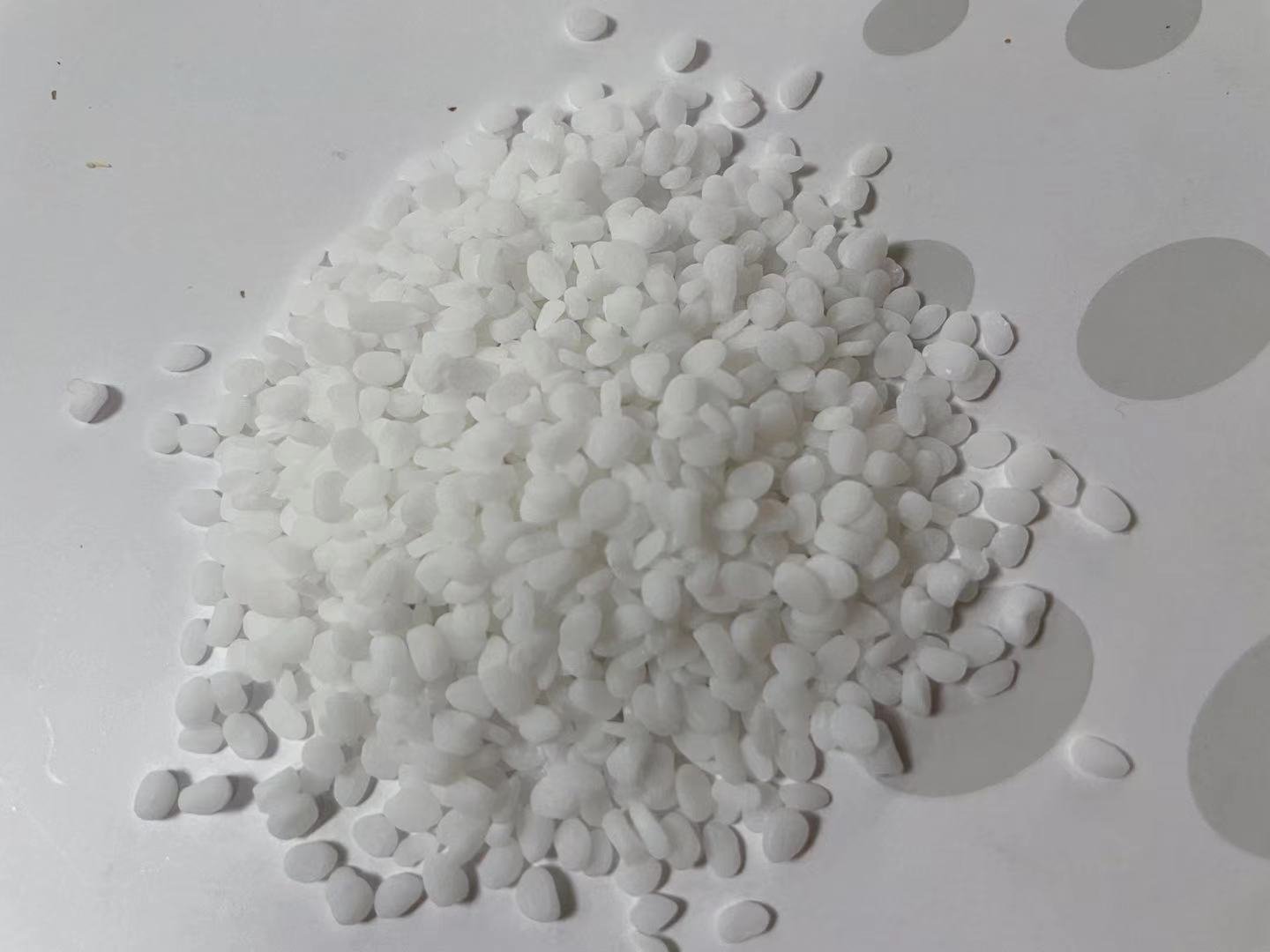
Sodium sulfate filler masterbatch is a granular functional additive produced from finely processed sodium sulfate, a compatible carrier resin and selected processing additives.
It may also be described as:
Na2SO4 filler masterbatch
Sodium sulfate filling masterbatch
Transparent filler masterbatch
Plastic cost-reduction masterbatch
Functional filler masterbatch
The granule form makes the product easier to mix, feed and process than adding inorganic powder directly.
Depending on the grade, sodium sulfate filler masterbatch may be used with PE or PP. For injection molding, the carrier system must be compatible with the customer’s polypropylene resin and processing conditions.
Why Use Sodium Sulfate Filler Masterbatch in PP?
The main purpose is to replace a controlled portion of virgin polypropylene in suitable products.
Potential benefits include:
Reduced virgin PP consumption
Lower formulation cost
Easy mixing with plastic granules
Consistent material feeding
Good dispersion with a suitable grade
Acceptable surface appearance
Stable processing under suitable conditions
The economic result depends on more than the price difference between PP resin and masterbatch. The finished-part weight, cycle time, rejection rate and required performance must also be considered.
Suitable PP Injection-Molded Products
Sodium sulfate filler masterbatch may be evaluated for non-critical, general-purpose PP products such as:
Household storage products
Plastic organizers
Waste bins
General containers
Hangers
Disposable plastic items
Packaging accessories
Stationery products
Selected household components
Other general consumer goods
The product should be used more cautiously in applications requiring:
High impact strength
Heavy load-bearing capacity
Very thin walls
Continuous outdoor exposure
Low-temperature impact resistance
Strict regulatory compliance
Safety-critical performance
A sample trial and finished-product test are necessary before mass production.
How Does It Reduce Injection-Molding Costs?
The direct saving comes from replacing part of the virgin PP resin with sodium sulfate filler masterbatch.
A simple formulation comparison may show a lower material cost per kilogram. However, the manufacturer should calculate the total cost per qualified molded part.
The calculation should include:
Virgin PP cost
Masterbatch cost
Color and other additives
Weight of each molded part
Molding-cycle time
Energy consumption
Rejection rate
Labor and machine downtime
Number of qualified parts produced
For example, a cheaper formulation may not generate real savings if the molded part becomes heavier or the rejection rate increases.
The best formulation is the one that reduces the cost of each qualified finished product.
How to Select the Right Grade
Not every sodium sulfate filler masterbatch is suitable for every PP product.
Before recommending a grade, the supplier should understand:
PP resin type
Melt flow rate
Virgin or recycled resin content
Part dimensions
Wall thickness
Required color
Transparency or appearance requirements
Impact-strength requirements
Processing temperature
Existing additives
Target cost reduction
Carrier-resin compatibility is particularly important. An incompatible carrier may cause poor dispersion, surface defects or weaker mechanical performance.
How Much Masterbatch Should Be Added?
There is no universal addition ratio for PP injection molding.
The appropriate dosage depends on:
Masterbatch formulation
PP grade
Part structure
Wall thickness
Required strength
Surface requirements
Use of recycled material
Processing equipment
End-use conditions
Begin with the supplier’s recommended trial dosage. After testing the molded parts, increase or decrease the ratio gradually.
Avoid choosing a dosage based only on the highest percentage advertised in the market. A high addition ratio is not useful if it causes deformation, breakage or customer complaints.
Recommended Production Trial
1. Record the Original Formula
Record the proportions of PP resin, recycled material, color masterbatch and other additives.
Also record the current part weight, cycle time, processing temperature and rejection rate.
2. Confirm Material Compatibility
Select a sodium sulfate filler masterbatch designed for the PP system. Confirm the carrier resin and recommended processing conditions with the supplier.
3. Mix the Materials Evenly
Uneven mixing may produce differences in color, strength, surface appearance and part weight.
Use suitable mixing equipment and ensure consistent feeding throughout the trial.
4. Start with a Controlled Dosage
Change only the masterbatch ratio during the initial comparison. Avoid simultaneously changing the PP grade, color formula and molding parameters.
This makes the result easier to evaluate.
5. Inspect Processing Behavior
During molding, observe:
Material feeding
Plasticization
Filling behavior
Mold release
Cycle stability
Deposits or contamination
Unusual odor or smoke
Machine pressure
Record any changes rather than relying only on visual judgment.
6. Test the Finished Parts
The molded parts should be tested according to their actual use.
Important checks may include:
Surface appearance
Color consistency
Dimensions
Part weight
Shrinkage and warpage
Impact resistance
Flexibility
Load-bearing performance
Drop resistance
Assembly performance
Only qualified finished parts should be included in the final cost calculation.
Common Problems in PP Injection Molding
Poor Surface Appearance
Possible symptoms include visible particles, flow marks, uneven gloss and rough surfaces.
Possible causes include poor dispersion, incompatible carrier resin, excessive dosage or unsuitable processing temperature.
Reduce the addition ratio and confirm the compatibility of the masterbatch with the PP resin.
Reduced Impact Strength
Adding filler may change impact performance, especially in thin or load-bearing components.
Possible solutions include lowering the filler ratio, adjusting the PP resin blend or evaluating a suitable toughening additive.
The final formula must be tested using the actual molded part.
Warpage or Dimensional Changes
Filler addition may change shrinkage and cooling behavior. Complex or uneven part designs can make the effect more noticeable.
Check the mold temperature, holding pressure, cooling time and material dosage. Measure the finished part after complete cooling.
Uneven Color
The natural appearance of the filler and its dispersion may affect the existing color formula.
Mix the materials thoroughly and review the color masterbatch dosage. If strict color matching is required, develop the color using the final production formula rather than the original virgin PP formula.
Unstable Material Feeding
Irregular granule size, moisture or uneven mixing may cause inconsistent feeding.
Inspect the raw materials and ensure that the masterbatch is stored in a dry, clean environment.
Using Sodium Sulfate Filler Masterbatch with Recycled PP
Sodium sulfate filler masterbatch may be evaluated in suitable recycled PP formulations, but recycled material introduces additional variables.
Recycled PP can vary in:
Melt flow rate
Color
Moisture
Contamination
Odor
Impact strength
Previous processing history
Before increasing the filler dosage, manufacturers should stabilize the recycled resin source as much as possible.
If both the recycled PP and masterbatch ratio change between batches, it becomes difficult to identify the reason for inconsistent product quality.
Quality Points Buyers Should Check
When comparing suppliers, buyers should evaluate more than the price per ton.
Important quality considerations include:
Consistent granule size
Stable filler content
Good dispersion
Suitable carrier resin
Controlled moisture
Reliable batch consistency
Clean packaging
Production-trial support
Application-specific recommendations
A stable product may create greater total savings by reducing downtime, waste and rejected parts.
Information to Provide When Requesting a Sample
Send the supplier the following information:
PP resin grade
Melt flow rate, if available
Virgin and recycled material ratio
Current formulation
Finished-product photos
Part dimensions and wall thickness
Required color and appearance
Mechanical-performance requirements
Current processing temperature
Target masterbatch dosage
This information helps the supplier recommend a more appropriate grade and trial plan.
Sodium Sulfate Filler Masterbatch Manufacturer
Xinfeng manufactures sodium sulfate filler masterbatch for PP injection molding, PE blown film and other plastic-processing applications.
Our product range also includes high-transparency toughening additives, color masterbatch, antiblock masterbatch and desiccant masterbatch.
We recommend products according to the customer’s resin system, equipment, finished-product requirements and cost target.
Send us your PP grade, existing formulation and finished-product information to request a suitable sodium sulfate filler masterbatch sample.
Frequently Asked Questions
Can sodium sulfate filler masterbatch be used in PP injection molding?
Yes, a compatible grade may be used in suitable PP injection-molding products. The final formulation must be confirmed through production testing.
Will it reduce the strength of PP parts?
Any filler may affect impact strength, flexibility and other mechanical properties. The effect depends on the dosage, PP grade and part structure.
Can it be used in transparent PP products?
It may help retain an acceptable level of transparency or translucency in certain products, but it will not be completely invisible. The actual result depends on the formulation and wall thickness.
Can it be used with recycled PP?
It may be tested with suitable recycled PP. However, variations in recycled material must be considered when evaluating the results.
Does the color formula need to be adjusted?
Possibly. Adding filler can change the final shade, opacity or gloss. Color matching should be completed using the final production formulation.
What dosage should be used?
There is no fixed dosage for all products. Begin with the manufacturer’s recommended trial ratio and adjust it after testing the finished part.
How should the real cost saving be calculated?
Compare the total production cost per qualified molded part, including material cost, part weight, cycle time, scrap and production stability.
Send us a message now for quotation.
WhatsApp: https://wa.memessage/IRZROGA5F2RQO1
WhatsApp:+86 17835035161