


How to Reduce PE Blown Film Costs with Sodium Sulfate Filler Masterbatch
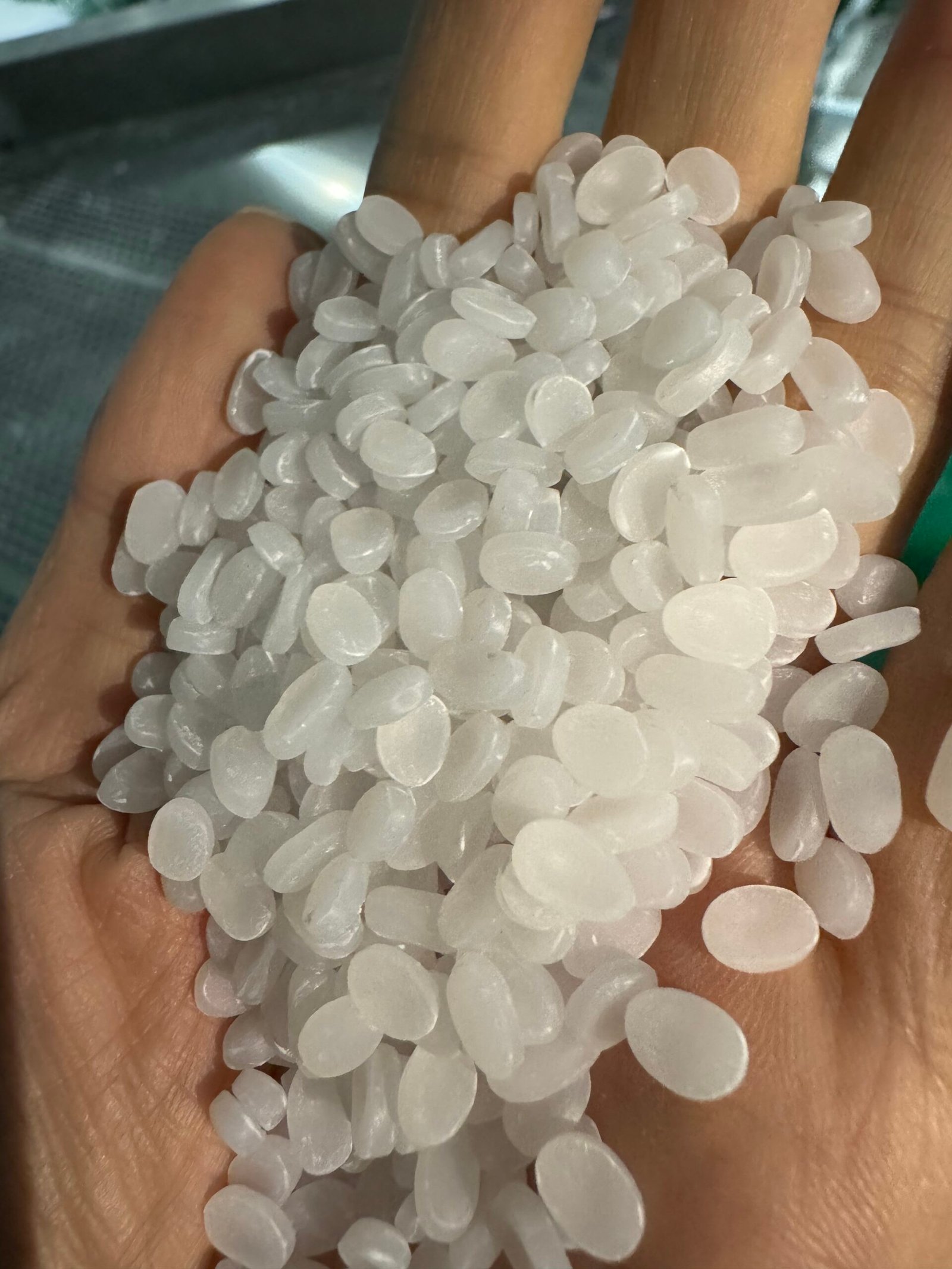
Raw-material costs have a direct impact on the profitability of PE blown-film production. For manufacturers of shopping bags, garbage bags and general packaging film, even a small change in resin consumption can significantly affect the total production cost.
Sodium sulfate filler masterbatch offers a practical cost-reduction option for suitable polyethylene film formulations. It can replace a controlled portion of virgin resin while helping manufacturers maintain the required appearance and processing performance.
However, successful cost reduction is not achieved by simply adding as much filler as possible. The formulation must balance material price, film strength, transparency, sealing performance and production stability.
Why Are PE Blown Film Manufacturers Looking for Cost-Reduction Solutions?
LDPE, LLDPE and HDPE resins normally account for a large part of the total cost of plastic-film production. When resin prices fluctuate, manufacturers may face lower profit margins and stronger price competition.
Common ways to control blown-film production costs include:
Optimizing the LDPE, LLDPE and HDPE blend
Reducing unnecessary product weight
Improving film-thickness uniformity
Lowering the scrap rate
Reusing suitable recycled material
Increasing production efficiency
Adding a compatible filler masterbatch
Among these methods, filler masterbatch is attractive because it can be introduced into an existing formulation without completely changing the production process.
The filler must nevertheless be selected according to the required film quality.
What Is Sodium Sulfate Filler Masterbatch?
Sodium sulfate filler masterbatch is a granular functional additive made from finely processed sodium sulfate, a compatible carrier resin and selected processing additives.
It is also known as:
Na2SO4 filler masterbatch
Sodium sulfate transparent filler masterbatch
Transparent filling masterbatch
PE film cost-reduction masterbatch
Compared with adding mineral powder directly, masterbatch granules are easier to handle, feed and disperse in conventional film-blowing equipment.
A suitable sodium sulfate filler masterbatch can be mixed with PE resin during production. Its purpose is to replace a controlled portion of the resin and help reduce formulation costs while maintaining acceptable film quality.
Why Use Sodium Sulfate Filler Masterbatch in PE Film?
One important consideration in film production is appearance. Conventional mineral fillers may create significant opacity or a chalky surface, particularly when the dosage increases.
Sodium sulfate filler masterbatch is often considered when the manufacturer wants to achieve a better balance between filling and translucency.
Potential benefits in suitable formulations include:
Reduced consumption of virgin PE resin
Lower raw-material cost
Good dispersion
Smooth material feeding
Acceptable transparency or translucency
Consistent film appearance
Compatibility with standard blown-film processing
These benefits are not identical in every application. The result depends on the resin system, film thickness, masterbatch grade, dosage and machine conditions.
Suitable PE Blown Film Applications
Sodium sulfate filler masterbatch may be tested in selected LDPE, LLDPE and HDPE film products, including:
Shopping bags
Garbage bags
T-shirt bags
Industrial liners
General packaging film
Translucent plastic bags
Courier and mailing bags
Non-food packaging products
The suitability of the masterbatch must be determined according to the finished product.
A formulation used for a thick garbage bag cannot automatically be applied to a thin shopping bag. Products requiring high transparency, heavy loading capacity or strict heat-sealing performance need more careful testing.
For regulated applications, the buyer must also confirm that the selected grade and supporting documentation meet the applicable market requirements.
How Does It Reduce Production Costs?
The direct saving comes from replacing part of the virgin resin with sodium sulfate filler masterbatch.
A basic material-cost calculation can be expressed as:
New formulation cost = resin cost + masterbatch cost + other additive costs
However, this calculation alone is not sufficient. Adding inorganic material may change the density and mechanical properties of the film.
The manufacturer should therefore calculate the cost per qualified finished product rather than only the cost per kilogram of the formulation.
A complete assessment should include:
Material cost per kilogram
Weight of each bag or film roll
Number of finished products per ton
Production speed
Energy consumption
Scrap rate
Percentage of qualified products
Customer acceptance requirements
A formula that is cheaper per ton may not provide real savings if every finished bag becomes heavier or the rejection rate increases.
How Much Sodium Sulfate Filler Masterbatch Should Be Added?
There is no universal addition ratio suitable for every PE film.
The appropriate dosage depends on:
Type of PE resin
Virgin or recycled material content
Film thickness
Required transparency
Tensile-strength requirement
Elongation and tear resistance
Sealing method
Printing requirements
Production equipment
Target cost reduction
The safest approach is to begin with the supplier’s recommended trial ratio and increase it gradually after evaluating the finished film.
Publishing an unrealistically high dosage may attract attention, but it does not help manufacturers achieve stable production. The correct ratio is the one that produces consistent, qualified film at a lower total cost.
Recommended Production Trial
A controlled trial makes it easier to understand the actual effect of the masterbatch.
Step 1: Record the Existing Formula
Record the proportions of LDPE, LLDPE, HDPE, recycled material, color masterbatch and other additives.
Also record the current film thickness, bag weight, output and scrap rate.
Step 2: Confirm Compatibility
Select a sodium sulfate filler masterbatch with a carrier system compatible with the PE formulation.
Incompatible materials may cause poor dispersion, unstable bubbles or weak film performance.
Step 3: Begin with a Controlled Dosage
Start with the supplier’s recommended trial ratio. Avoid making several large formulation changes at the same time.
Changing only one main variable makes it easier to evaluate the masterbatch accurately.
Step 4: Observe Processing Stability
During the trial, check:
Feeding consistency
Melting and dispersion
Film-bubble stability
Die deposits
Film-thickness uniformity
Production speed
Stop the trial and review the formulation if abnormal deposits or serious instability occur.
Step 5: Test the Finished Film
Compare the trial film with the original product.
Important tests include:
Transparency and haze
Tensile strength
Elongation
Tear resistance
Puncture resistance
Heat-sealing strength
Surface smoothness
Printing performance
The specific tests should match the actual application.
Step 6: Calculate the Real Saving
Calculate the cost per qualified bag, kilogram of film or finished roll.
Include changes in product weight, production output and scrap rate. This provides a more accurate result than comparing raw-material prices alone.
Common Problems and Possible Causes
Film Becomes Too Hazy
Possible causes include excessive dosage, unsuitable film thickness, poor dispersion or incompatibility with the base resin.
Reduce the trial ratio and confirm that the masterbatch grade is suitable for the application.
Film Strength Decreases
Any filler can influence mechanical properties. Review the dosage, resin blend and required film strength.
The formulation may require more LLDPE or another suitable performance additive, depending on the application.
Film Bubble Becomes Unstable
Possible causes include moisture, uneven mixing, incompatible carrier resin or unsuitable processing settings.
Check storage conditions, mixing uniformity, extrusion temperature and masterbatch compatibility.
Sealing Performance Changes
The filler ratio and resin formulation may affect heat-sealing behavior.
Evaluate sealing temperature, pressure and time. Do not approve a new formulation without testing the actual packaging or bag-making process.
Surface Contains Visible Particles
Visible particles may indicate poor dispersion, contamination or an unsuitable masterbatch grade.
Consistent particle processing and quality control are important when selecting a supplier.
What Makes a Reliable Sodium Sulfate Filler Masterbatch?
A low purchase price does not guarantee a low production cost.
A reliable masterbatch should provide:
Uniform granule size
Stable sodium sulfate content
Good dispersion
Suitable PE carrier compatibility
Controlled moisture
Consistent color and appearance
Stable batch-to-batch performance
Technical support for production trials
Before placing a large order, buyers should test a sample under their own production conditions.
Information to Send Your Supplier
To receive a more suitable product recommendation, provide:
PE resin type
Virgin and recycled resin ratio
Current formulation
Film thickness
Finished-product application
Required transparency
Bag weight or film-roll specifications
Mechanical-performance requirements
Current processing temperature
Target cost reduction
Photos or samples of the finished product
Detailed application information helps the supplier recommend an appropriate grade and starting dosage.
Sodium Sulfate Filler Masterbatch Manufacturer
Xinfeng manufactures sodium sulfate filler masterbatch for PE blown film and other plastic-processing applications.
Our functional additive range also includes high-transparency toughening additives, color masterbatch, antiblock masterbatch and desiccant masterbatch.
We understand that every film formulation is different. Our recommendations are based on the customer’s resin, equipment, product thickness, performance requirements and cost target.
Contact Xinfeng with your current formulation or finished-product sample to discuss a suitable sodium sulfate filler masterbatch and arrange a production trial.
Frequently Asked Questions
Can sodium sulfate filler masterbatch be used with LDPE?
A compatible grade may be used in suitable LDPE film formulations. The final dosage should be confirmed through testing.
Can it be used with LLDPE and HDPE?
Suitable grades can be tested in LLDPE and HDPE formulations. Carrier compatibility and film-performance requirements must be considered.
Will it make PE film completely transparent?
No filler should be described as completely invisible in every film. The final transparency depends on the resin, dosage, dispersion, film thickness and processing conditions.
Does it affect film strength?
Any filler may influence tensile strength, elongation and tear resistance. Begin with a controlled dosage and test the finished film before full-scale production.
Can it be used with recycled PE?
It may be used in suitable recycled PE formulations. However, recycled resin varies in moisture, contamination and mechanical performance, so trials are particularly important.
Is the cheapest filler masterbatch the best option?
Not necessarily. Buyers should compare dispersion, production stability, finished-product weight, scrap rate and cost per qualified product.
How can I request a suitable grade?
Send information about your resin, formulation, film thickness, finished-product application and required performance to the supplier.
Send us a message now for quotation.
WhatsApp: https://wa.memessage/IRZROGA5F2RQO1
WhatsApp:+86 17835035161