


How to Store Sodium Sulfate Filler Masterbatch and Prevent Moisture Problems
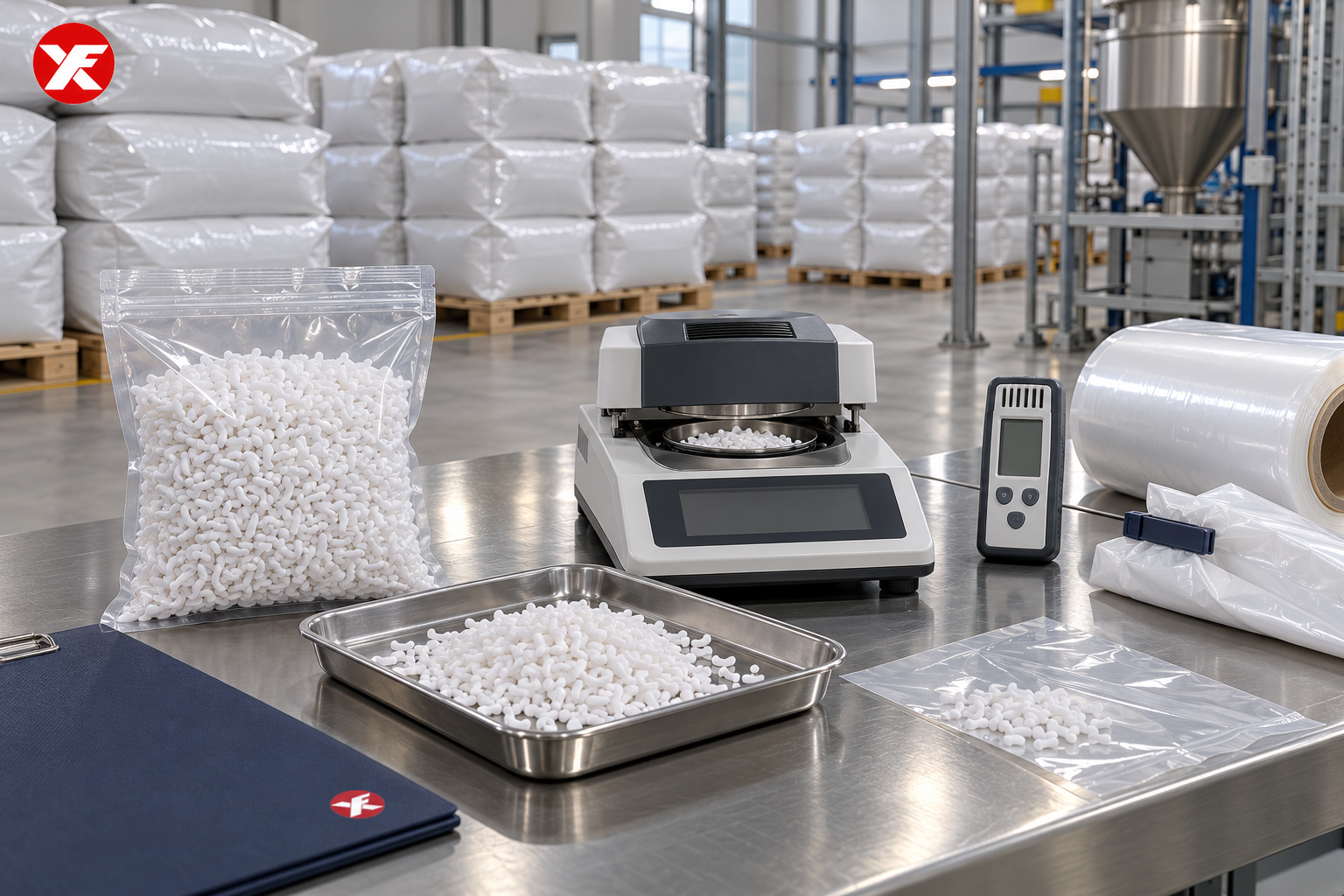
Stable PE film production begins before the raw materials enter the extruder.
Storage conditions, packaging integrity, warehouse cleanliness and opened-bag management can all affect the condition of sodium sulfate filler masterbatch before processing.
When raw materials are exposed to moisture or contamination, manufacturers may experience bubbles, pinholes, fish eyes, unstable film appearance or inconsistent extrusion. However, these defects can also be caused by unsuitable temperatures, poor mixing, recycled-material contamination or equipment problems.
A structured inspection process is therefore more reliable than automatically assuming that every film defect comes from the masterbatch.
Why Is Proper Storage Important?
Masterbatch is produced and packaged to provide controlled feeding and dispersion. Poor storage can introduce variables that were not present when the material left the factory.
Possible storage-related risks include:
– Damaged packaging
– Surface moisture
– Condensation
– Dust and foreign particles
– Mixing between grades
– Incorrect batch rotation
– Heat exposure
– Direct sunlight
– Material spilled onto the floor
– Open bags left unsealed
In blown-film production, even small amounts of contamination or unstable material can create visible defects because the polymer is stretched into a thin film.
Keep the Original Packaging Sealed
Unopened masterbatch should remain in its original packaging until required for production.
The packaging helps protect the pellets against:
– Moisture
– Dust
– Workshop contamination
– Accidental material mixing
– Direct contact with the floor
– Loss of product identification
Do not cut or puncture bags during transportation. Inspect packaging when material arrives and separate damaged bags for further assessment.
If an outer bag is damaged but the internal barrier liner remains intact, the product may still be protected. If both layers are open, the material should be inspected before use.
Store Bags Off the Floor
Masterbatch bags should be placed on clean pallets or suitable warehouse racking.
Direct floor storage can expose the material to:
– Damp concrete
– Cleaning water
– Forklift contamination
– Dust
– Packaging damage
– Temperature differences that promote condensation
Maintain sufficient space around the pallets for inspection and cleaning. Avoid pressing bags directly against exterior walls where temperature and moisture conditions may fluctuate.
Use a Dry, Covered Warehouse
The warehouse should be clean, dry and protected from rain and direct sunlight.
Avoid storage near:
– Open doors exposed to rain
– Water pipes
– Roof leaks
– Steam
– Washing areas
– Outdoor walls with condensation
– High-temperature equipment
– Dust-producing operations
– Strong-smelling chemicals
Where environmental conditions vary significantly, warehouse temperature and relative humidity can be monitored and recorded.
The supplier’s storage recommendations and shelf-life information should always take priority.
Prevent Condensation
Condensation can occur when cold material is moved into a warmer, humid environment.
Water may then form on the packaging or pellet surfaces even though the bags were previously stored in a dry location.
To reduce this risk:
– Avoid sudden temperature changes where practical.
– Allow cold packaged material to reach the production-area temperature before opening.
– Keep the bag sealed during temperature equalization.
– Inspect for visible moisture before feeding.
– Do not place cold material directly beside hot processing equipment and immediately open it.
This is especially relevant during seasonal changes or when material is transported between different climates.
Reseal Opened Bags Immediately
An opened bag should not remain exposed beside the production line for an extended period.
After removing the required quantity:
1. Remove excess air where practical.
2. Fold the inner liner securely.
3. Use an appropriate sealing clip or tie.
4. Close the outer bag.
5. Keep the product label visible.
6. Record the opening date if required.
7. Return the bag to a dry storage area.
Do not leave the remaining pellets in an open bucket or uncovered hopper overnight unless the equipment and process have been designed for that practice.
Maintain Batch Identification
Every partially used bag should remain traceable.
Record information such as:
– Product grade
– Batch number
– Delivery date
– Opening date
– Remaining quantity
– Production line
– Formulation in which it was used
Traceability helps determine whether a production problem is related to one material batch, storage location, machine or formulation.
Never combine unidentified remaining material from several bags into one unmarked container.
Follow First-In, First-Out Management
Use an organized stock-rotation system.
First-in, first-out management helps prevent older material from remaining in storage while newer deliveries are consumed. Products approaching the supplier’s recommended storage period can be identified and evaluated before use.
Good warehouse organization should clearly separate:
– Different masterbatch grades
– Different production batches
– Approved material
– Material awaiting inspection
– Damaged packaging
– Returned material
– Unidentified material
Physical separation reduces the risk of feeding the wrong grade into production.
Inspect the Pellets Before Use
Before feeding an opened or stored bag, inspect a representative sample.
Check for:
– Normal pellet shape
– Consistent color
– Free-flowing condition
– Clumps
– Surface moisture
– Dust
– Foreign particles
– Unusual odor
– Packaging fragments
– Evidence of mixed materials
Pellet clumping does not always prove that moisture is present, but it should be investigated before production.
Compare the sample with a retained approved reference when available.
Moisture Is Not the Only Cause of Film Bubbles
Bubbles and pinholes are frequently blamed on wet material. However, several different problems can create similar symptoms.
Possible causes include:
– Moisture
– Trapped air
– Volatile contamination
– Degraded recycled material
– Excessive processing temperature
– Poor melt homogenization
– Contaminated screens
– Unmelted material
– Incorrect screw speed
– Foreign polymer contamination
Research on blown-film defects identifies moisture, contamination, temperature, poor mixing and filtration problems among the factors that can contribute to instability or visible film defects. Review of blown-film defects and corrective measures
Troubleshooting should therefore use controlled comparisons rather than a single assumption.
How to Check Whether Moisture Is Involved
A practical investigation can include:
1. Record the masterbatch batch number.
2. Inspect the bag and inner liner.
3. Check warehouse and production-area conditions.
4. Compare material from an unopened bag.
5. Inspect the base resin and recycled material.
6. Run a controlled trial using known dry materials.
7. Keep machine settings unchanged during the comparison.
8. Record whether bubbles or pinholes decrease.
9. Check the screen pack and die.
10. Retain samples from both trials.
If the problem remains after the suspected material has been replaced, other causes should be investigated.
Use Appropriate Moisture Testing
Where moisture control is critical, a suitable moisture analyzer or laboratory method may be used.
The testing method should be appropriate for:
– The masterbatch formulation
– Expected moisture level
– Sample size
– Required accuracy
– Supplier specification
– Customer requirements
Results from different testing methods may not be directly comparable. Use a consistent method and operating procedure when monitoring changes between batches.
A single surface reading should not replace a representative sample.
Do Not Dry Material Without Guidance
Applying unnecessary or excessive heat can create additional problems.
Overheating may affect:
– Carrier resin
– Additive stability
– Pellet shape
– Pellet flow
– Product performance
– Packaging
If drying is considered necessary, obtain recommendations for:
– Drying temperature
– Drying time
– Equipment type
– Air conditions
– Maximum allowable exposure
– Handling after drying
Do not assume that settings used for another resin or masterbatch are suitable.
Keep Hoppers and Conveying Systems Clean
Even correctly stored material can become contaminated between the bag and the extruder.
Inspect and clean:
– Mixing equipment
– Transfer containers
– Vacuum loaders
– Conveying pipes
– Hopper magnets
– Feeders
– Hoppers
– Screens
– Material-contact surfaces
Remove material remaining from previous production grades before starting a new formulation.
Condensation in conveying systems should also be investigated if the equipment operates across areas with different temperatures.
Monitor Production After a New Bag Is Opened
Record process conditions when changing to a new bag or material batch.
Monitor:
– Extrusion pressure
– Motor current
– Output
– Bubble stability
– Film surface
– Pinholes
– Fish eyes
– Odor
– Die buildup
– Screen-changing frequency
If a problem begins immediately after a bag change, retain samples from both the previous and new bags. This provides useful evidence for troubleshooting with the supplier.
Distinguish Moisture Defects from Dispersion Problems
Moisture-related symptoms may include bubbles, surface marks or instability, but poor dispersion may produce white specks, rough areas or concentrated particles.
Contamination may appear as:
– Dark particles
– Gels
– Paper fibers
– Metallic specks
– Unmelted fragments
– Irregular fish eyes
Equipment problems can produce:
– Repeating die lines
– Thickness bands
– Unstable frost-line height
– Wrinkles
– Uneven cooling patterns
The location, frequency and shape of the defect can help identify its likely source.
Check All Raw Materials
A PE film formulation may contain:
– Virgin resin
– Recycled PE
– Filler masterbatch
– Color masterbatch
– Slip agent
– Antiblock masterbatch
– Other additives
Moisture or contamination can come from any of these components.
Recycled material can be particularly variable because of washing, drying, storage and previous processing. Before blaming one additive, compare the condition and batch history of every material in the formulation.
Recommended Warehouse Checklist
A simple daily or weekly checklist can include:
– Warehouse dry and clean
– No roof or pipe leaks
– Bags stored on pallets
– Packaging undamaged
– Products clearly labeled
– Opened bags resealed
– Batch numbers visible
– First-in, first-out followed
– Damaged material segregated
– No unidentified containers
– No direct sunlight or abnormal heat
– Hopper and conveying system clean
– Environmental records completed where required
Consistent basic controls often prevent problems that are difficult to diagnose later on the production line.
Information to Give the Supplier
If a storage or moisture problem is suspected, provide:
– Product name and grade
– Batch number
– Delivery date
– Opening date
– Storage conditions
– Photographs of the packaging
– Photographs of the pellets
– Moisture-test method and result
– Base-resin formulation
– Processing temperature
– Description of the film defect
– Time at which the problem appeared
– Comparison with an unopened bag
This information allows the supplier to evaluate the issue more efficiently.
Conclusion
Proper storage helps maintain the consistency of sodium sulfate filler masterbatch from delivery through production.
Keep bags sealed, dry, correctly labeled and stored off the floor. Reseal partially used material promptly and maintain full batch traceability.
If film bubbles, pinholes or fish eyes occur, investigate moisture as one possible cause—but also check the base resin, recycled material, temperature, mixing, filtration and equipment condition.
Xinfeng supplies sodium sulfate filler masterbatch for selected PE blown-film and plastic bag applications. Storage guidance and production-trial recommendations can be provided according to the product grade and customer application.
For samples or technical consultation, visit Xinfeng Masterbatch.
Send us a message now for quotation.
WhatsApp: https://wa.memessage/IRZROGA5F2RQO1
WhatsApp:+86 17835035161