


Sodium Sulfate Filler Masterbatch for Garbage Bag Production
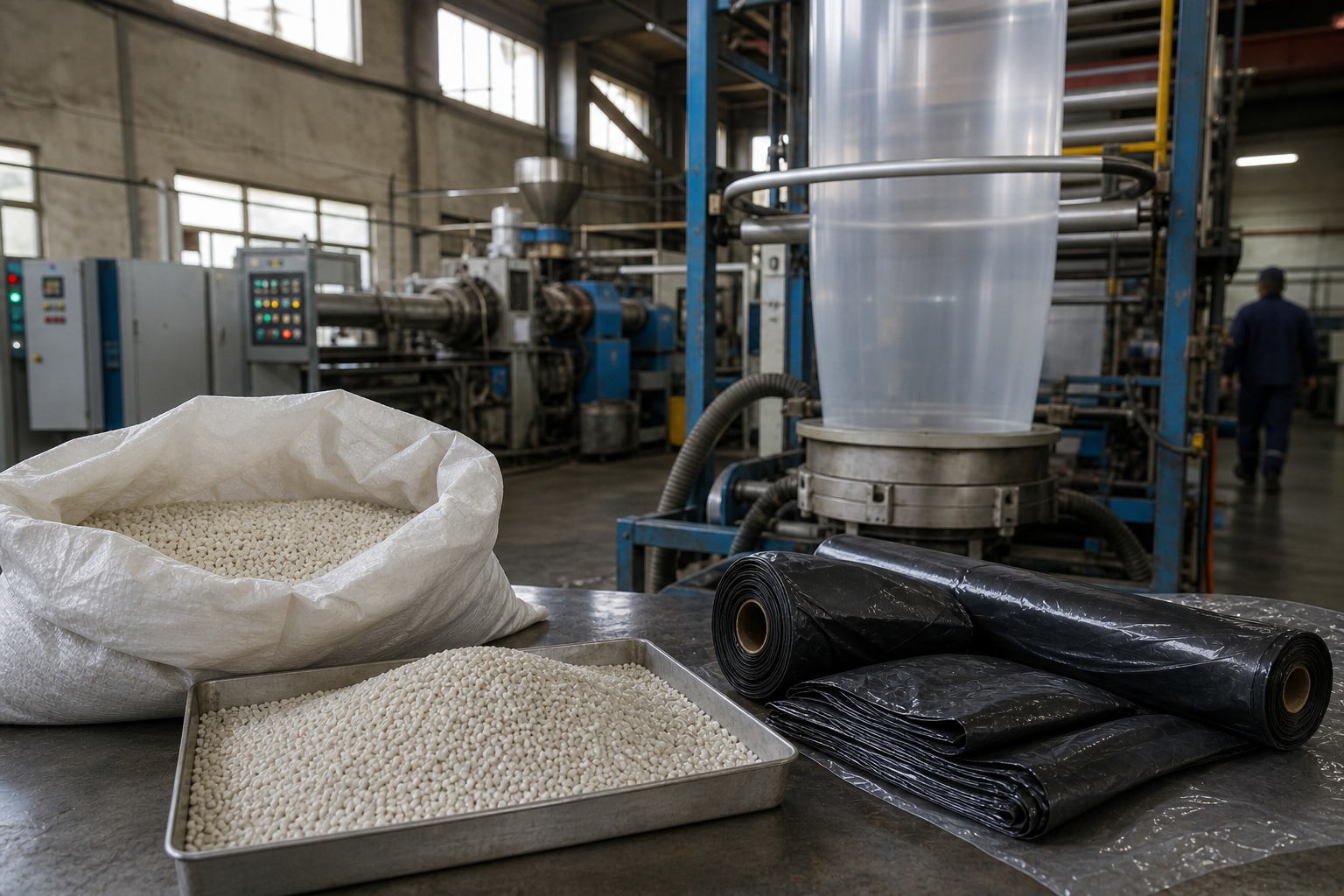
Garbage bags are highly cost-sensitive products. Manufacturers must control raw-material costs while maintaining sufficient strength, sealing performance and production stability.
Sodium sulfate filler masterbatch can provide a practical cost-reduction solution for suitable PE garbage bag formulations. It may replace a controlled portion of plastic resin while helping manufacturers maintain an acceptable balance of appearance, processability and finished-bag performance.
However, the best result does not come from using the highest possible filler ratio. The formulation must be developed according to the bag thickness, load capacity, resin system, recycled-material quality and bag-making process.
This guide explains how to evaluate sodium sulfate filler masterbatch for garbage bag production.
What Is Sodium Sulfate Filler Masterbatch?
Sodium sulfate filler masterbatch is a granular functional additive made from finely processed sodium sulfate, a compatible carrier resin and selected processing additives.
It is also known as:
Na2SO4 filler masterbatch
Sodium sulfate filling masterbatch
Sodium sulfate transparent filler masterbatch
PE film cost-reduction masterbatch
Functional filler masterbatch
Its granular form makes it easier to mix and feed than adding inorganic powder directly.
In suitable garbage bag formulations, sodium sulfate filler masterbatch may replace a controlled portion of virgin or recycled PE. The final dosage must be determined through actual production testing.
Why Use It in Garbage Bags?
Raw materials account for a large part of garbage bag manufacturing costs. Many producers already combine virgin and recycled polyethylene to achieve the required cost-performance balance.
Sodium sulfate filler masterbatch introduces another formulation option.
Potential benefits in suitable applications include:
Reduced consumption of PE resin
Lower formulation cost
Convenient granule feeding
Good dispersion with a compatible grade
Acceptable film appearance
Stable processing under suitable conditions
Flexible use in cost-sensitive formulations
The economic benefit should be measured by the cost per qualified finished bag rather than only by the cost per kilogram of material.
Suitable Types of Garbage Bags
The masterbatch may be evaluated in products such as:
Household garbage bags
Office waste-bin liners
Drawstring trash bags
Star-sealed garbage bags
Flat-bottom refuse bags
Industrial refuse sacks
Black recycled-PE garbage bags
Colored waste bags
Different products require different performance levels.
A lightweight office-bin liner does not have the same strength requirement as a heavy-duty industrial refuse sack. The formula and masterbatch dosage should therefore be selected for the actual application.
Understanding the PE Resin System
Garbage bag formulations may include:
LDPE
LLDPE
HDPE
Virgin PE
Recycled PE
Mixed PE materials
Each resin influences the film differently.
LDPE can support processing and film softness. LLDPE is commonly used when tensile, puncture or tear performance is important. HDPE may be used to modify stiffness and film feel, depending on the product.
Recycled PE provides cost advantages but can vary in moisture, contamination, color and mechanical properties.
The carrier resin of the sodium sulfate filler masterbatch should be compatible with the primary polymer system.
The Role of Recycled PE
Many garbage bags contain recycled plastic because transparency and appearance requirements are often less strict than those of premium packaging film.
However, recycled PE can vary between suppliers and production batches.
Possible variations include:
Polymer composition
Melt flow
Moisture
Odor
Pigment content
Contamination
Mechanical strength
Previous processing history
If recycled-resin quality is unstable, the same sodium sulfate filler masterbatch dosage may produce different results.
Before optimizing the filler ratio, manufacturers should stabilize the recycled-material source as much as possible.
How Much Masterbatch Should Be Added?
There is no universal dosage for garbage bags.
The suitable addition ratio depends on:
Bag thickness
Bag dimensions
Required load capacity
Virgin and recycled resin ratio
Type of PE
Required color
Sealing method
Film-blowing equipment
Customer specifications
Target cost reduction
Begin with the supplier’s recommended starting ratio and increase it gradually only after the bags pass the required tests.
The best dosage is the ratio that produces the lowest cost per qualified bag—not necessarily the highest filler percentage.
Recommended Production Trial
Step 1: Record the Original Formula
Record:
LDPE, LLDPE and HDPE percentages
Recycled PE percentage
Color masterbatch dosage
Other additive dosages
Film thickness
Bag dimensions
Bag weight
Production temperature
Output per hour
Scrap rate
This creates a reliable baseline.
Step 2: Select a Compatible Grade
Provide the masterbatch supplier with the complete application information.
A sodium sulfate filler masterbatch recommended for PE blown film should have a suitable carrier and sufficient dispersion for the customer’s equipment and film requirements.
Step 3: Mix Materials Uniformly
Accurately weigh the masterbatch and other raw materials.
Uneven mixing may cause continuous changes in:
Film strength
Transparency
Color
Bubble stability
Bag weight
Sealing performance
Suitable mixing and dosing equipment improves trial accuracy.
Step 4: Keep the Main Settings Stable
Use the original machine settings as the initial reference.
Do not change the resin blend, film thickness, filler ratio and extrusion settings simultaneously. Change one main factor at a time and record the result.
Step 5: Produce Enough Film for Bag Testing
A few meters of visually acceptable film are not sufficient.
Run the line long enough to evaluate:
Stable feeding
Film-bubble behavior
Deposits
Film uniformity
Production output
Bag-making performance
Then convert the film into finished bags for functional testing.
Key Film-Blowing Checks
During production, monitor:
Film-bubble stability
Frost-line position
Film width
Thickness uniformity
Surface smoothness
Visible particles
Haze or opacity
Die deposits
Extrusion pressure
Output per hour
If instability appears after adding the masterbatch, check the dosage, recycled-material moisture, mixing, temperature profile and carrier compatibility.
Essential Garbage Bag Tests
Bag Weight
Measure several finished bags and calculate the average.
Changes in formulation density may affect the product weight and number of bags produced per ton.
Film Thickness
Check multiple points across the film width. Uneven thickness can create weak areas and distort the cost comparison.
Load-Bearing Test
Fill the bag with a controlled weight and lift it under repeatable conditions.
The test weight should reflect the intended application rather than an arbitrary marketing claim.
Drop Test
Fill and seal the bag according to its normal use, then conduct a controlled drop test.
Observe the body, bottom seal, side seals and drawstring area, where applicable.
Puncture Resistance
Garbage bags may come into contact with packaging corners and irregular waste. Evaluate puncture performance according to the expected contents.
Tear Resistance
Check whether small cuts or notches spread easily during handling.
Heat-Sealing Strength
A strong film can still fail if the bottom or side seal is weak.
Test the actual bag after converting, not only the blown-film roll.
Drawstring Performance
For drawstring bags, check the channel, closure and lifting performance using the final formulation.
Maintaining Film Strength
Any filler can affect mechanical properties when the formula changes.
If garbage bags become easier to tear, review:
Sodium sulfate masterbatch dosage
LLDPE content
Recycled PE quality
Film thickness
Dispersion
Extrusion temperature
Cooling conditions
Seal settings
A suitable toughening additive may be evaluated where the formulation requires additional mechanical support. It should be tested with the complete formula and included in the cost calculation.
No additive can fully compensate for severely degraded or contaminated recycled material.
Color Considerations
Black is a common garbage bag color, but blue, green and other colors are also used for waste separation or branding.
Adding sodium sulfate filler masterbatch may influence:
Shade
Opacity
Gloss
Color consistency
Required color-masterbatch dosage
Color matching should be conducted with the final resin and additive formulation.
If the recycled PE changes from batch to batch, the color formula may also require adjustment.
Moisture and Desiccant Masterbatch
Moisture can be a concern when garbage bags contain recycled PE.
Possible symptoms include:
Unstable bubbles
Small film defects
Surface marks
Unusual extrusion noise
Increased rejection rates
Inspect the storage and moisture condition of every raw material.
A suitable desiccant masterbatch may help in certain recycled-plastic formulations, but it should not replace correct storage, drying or material-quality control.
Severely wet material should be isolated and evaluated before use.
Common Problems and Solutions
The Film Becomes Too Brittle
Reduce the filler ratio and review the recycled-resin quality, LLDPE content, film thickness and dispersion.
Bags Break at the Seal
Check sealing temperature, pressure, time, film thickness and the filler level. Test the completed bag-making process.
Film Bubbles Become Unstable
Check material moisture, mixing uniformity, temperature settings, recycled-material consistency and masterbatch compatibility.
White Spots Appear in Black Bags
Check dispersion, machine cleanliness, processing temperature and contamination in the recycled resin.
Bag Weight Increases
Review film thickness and density-related effects. Calculate the output per ton and cost per qualified bag.
The Expected Saving Is Not Achieved
Include product weight, scrap, production speed, downtime and rejected bags in the calculation.
Calculate the Real Cost per Bag
Use the following basic calculation:
Material cost per bag = formulation cost per kg × bag weight in kg
Then include:
Scrap
Energy
Production speed
Downtime
Bag-making losses
Packaging
Rejected products
A lower-cost formulation per kilogram may not create a lower cost per bag if each bag becomes heavier or the scrap rate increases.
Compare only bags that meet the same quality standard.
Information to Send the Supplier
For a suitable recommendation, provide:
PE resin types
Virgin and recycled percentages
Complete current formulation
Bag dimensions
Film thickness
Finished-bag weight
Required load capacity
Bag color
Sealing method
Current production problems
Target cost reduction
Bag or film samples
This information helps the supplier recommend a suitable sodium sulfate filler masterbatch grade and starting dosage.
Sodium Sulfate Filler Masterbatch for Garbage Bags
Xinfeng manufactures sodium sulfate filler masterbatch for PE blown film, including suitable garbage bag applications.
Our functional additive range also includes:
High-transparency toughening additives
Color masterbatch
Antiblock masterbatch
Desiccant masterbatch
Other plastic functional additives
We recommend products according to the customer’s resin system, recycled-material quality, bag specification, equipment and target cost.
Send us your existing formula and garbage bag specifications to request a sample and production-trial recommendation.
Frequently Asked Questions
Can sodium sulfate filler masterbatch be used in black garbage bags?
It may be used in suitable black PE garbage bag formulations. The color, dispersion and mechanical performance should be tested with the final black masterbatch formula.
Can it be used with recycled PE?
Yes, it may be evaluated with suitable recycled PE. Moisture, contamination and batch consistency must be controlled.
Will it reduce bag strength?
Any filler may influence strength when the dosage changes. Load, drop, tear, puncture and sealing tests should be completed before mass production.
What dosage is suitable for garbage bags?
There is no fixed dosage for every bag. It depends on thickness, resin formulation, load requirement and production conditions.
Can it be used for heavy-duty refuse sacks?
It may be evaluated, but heavy-duty products require more conservative formulation development and stricter mechanical testing.
Do I need to adjust the black masterbatch dosage?
Possibly. The filler and recycled resin may influence shade, opacity and gloss. Evaluate color using the final formula.
How should cost savings be calculated?
Calculate the total cost per qualified finished bag, including bag weight, scrap, output and production stability.
Request a Garbage Bag Production Sample
Send Xinfeng your:
Current resin formula
Virgin/recycled material ratio
Bag size and thickness
Bag weight
Required load capacity
Color
Current production problem
Target cost reduction
We can recommend a suitable sodium sulfate filler masterbatch for your garbage bag production trial.
Send us a message now for quotation.
WhatsApp: https://wa.memessage/IRZROGA5F2RQO1
WhatsApp:+86 17835035161