


What Affects Transparency When Using Sodium Sulfate Filler Masterbatch?
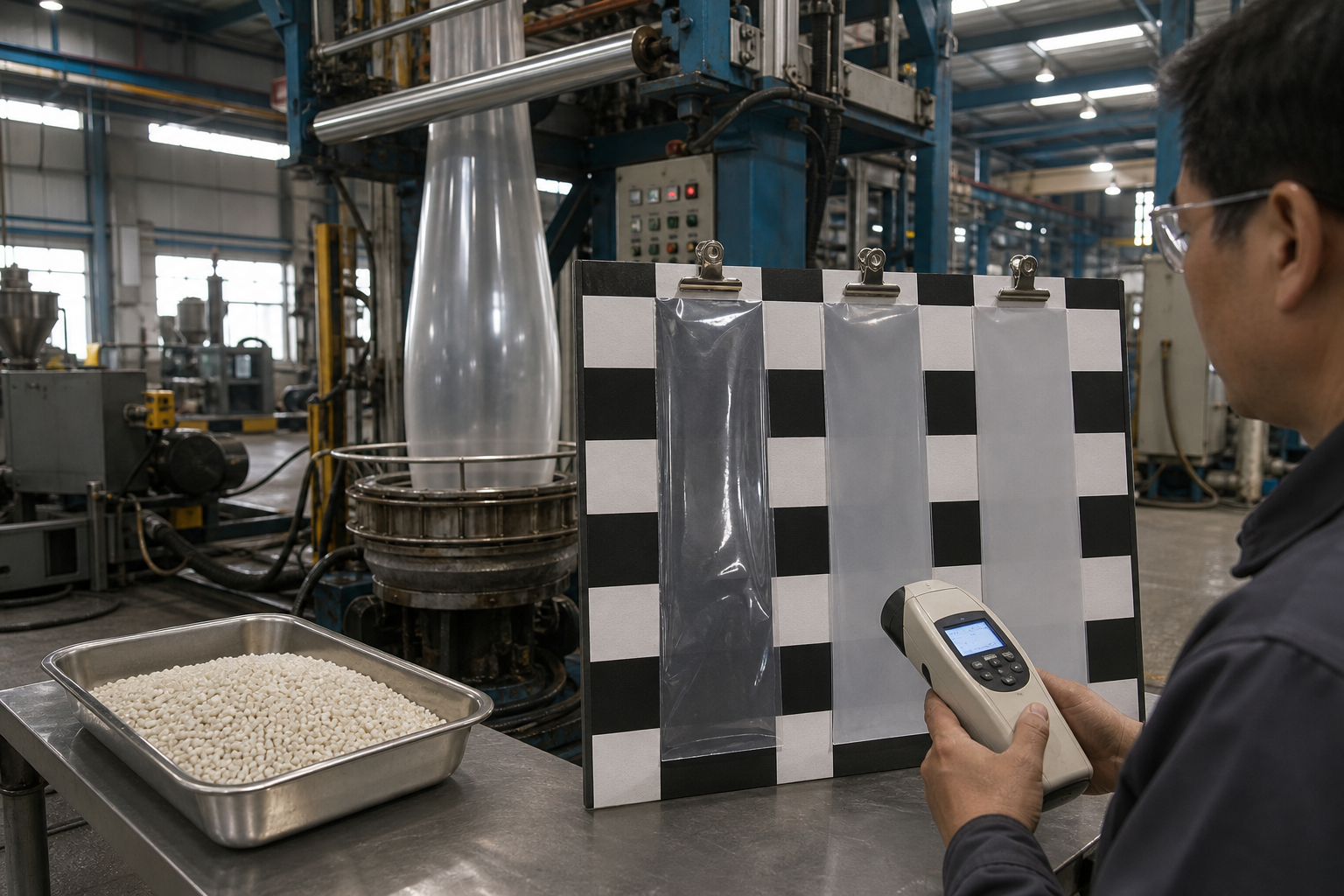
Transparency is an important consideration when selecting a filler masterbatch for PE film and certain PP products.
Sodium sulfate filler masterbatch is often chosen when manufacturers want to reduce virgin resin consumption while retaining better transparency or translucency than may be possible with some conventional mineral fillers.
However, no filler masterbatch remains completely invisible in every plastic formulation. The final appearance depends on the masterbatch dosage, resin system, product thickness, dispersion and processing conditions.
This guide explains the main factors affecting transparency and how manufacturers can conduct a reliable production trial.
What Is Sodium Sulfate Filler Masterbatch?
Sodium sulfate filler masterbatch is a granular functional additive made from finely processed sodium sulfate, a compatible carrier resin and selected processing additives.
It is also known as:
Na2SO4 filler masterbatch
Sodium sulfate filling masterbatch
Sodium sulfate transparent filler masterbatch
Transparent filling masterbatch
Plastic cost-reduction masterbatch
In a suitable formulation, it may replace a controlled portion of virgin or recycled PE or PP resin.
Its purpose is to help manufacturers balance raw-material cost, processing stability, appearance and finished-product performance.
Does Sodium Sulfate Filler Masterbatch Produce Completely Transparent Plastic?
Not necessarily.
The term “transparent filler masterbatch” usually describes a filler designed to maintain a relatively good optical appearance in suitable applications. It does not mean that the filler will be invisible in every film thickness, polymer or addition ratio.
The final product may be:
Transparent
Semi-transparent
Translucent
Hazy
Opaque
The result should be evaluated using the customer’s actual formulation and finished-product specifications.
Manufacturers should avoid comparing samples with different thicknesses or resin grades because these variables can significantly change the visual result.
1. Masterbatch Dosage
Dosage is one of the most important factors affecting transparency.
At a lower addition ratio, the optical change may be relatively limited in a compatible formulation. As the filler level increases, haze and light scattering may become more noticeable.
A higher dosage may reduce formulation cost per kilogram, but it can also affect:
Transparency
Gloss
Film strength
Elongation
Sealing performance
Product weight
Processing stability
The correct dosage is the ratio that achieves the required cost reduction without taking the finished product outside its optical and mechanical standards.
Begin with the supplier’s recommended starting ratio and increase it gradually.
2. Film or Product Thickness
Thickness has a direct effect on the distance that light travels through the material.
A thin film may appear clearer than a thicker sample made from the same formulation. Similarly, an injection-molded part with a thick wall may show more haze than a thin section.
When comparing formulations:
Keep film thickness consistent
Measure several points across the film
Compare parts with the same wall thickness
Use the same lighting and background
Record the actual thickness instead of relying on machine settings alone
A visual comparison is unreliable when one sample is thinner than the other.
3. Base Resin Selection
The natural optical properties of the polymer influence the final result.
Common PE film resins include:
LDPE
LLDPE
HDPE
Blends of multiple PE grades
Virgin PE
Recycled PE
LDPE, LLDPE and HDPE have different structures and may produce different levels of haze and gloss. The individual resin grade, additives and processing history can also influence clarity.
The carrier resin of the sodium sulfate filler masterbatch should be compatible with the base polymer. Poor compatibility can create interfaces that scatter light and reduce transparency.
Before requesting a sample, tell the supplier the exact polymer and application.
4. Virgin and Recycled Resin Content
Recycled plastic introduces additional optical variables.
Recycled PE may contain:
Mixed polymers
Residual pigments
Degraded material
Inorganic contamination
Moisture
Different additives
Particles from previous applications
Even a well-dispersed sodium sulfate filler masterbatch cannot make low-quality recycled resin clear.
When recycled material is used, evaluate its natural color, cleanliness, filtration and batch consistency before determining the effect of the filler.
Use the same recycled-resin batch when comparing different masterbatch dosages.
5. Filler Dispersion
Good dispersion distributes the filler more evenly throughout the polymer.
Poor dispersion may cause:
White spots
Visible particles
Uneven haze
Rough surfaces
Weak areas
Inconsistent appearance
Unstable production
Dispersion depends on both masterbatch quality and processing conditions.
Important factors include:
Filler processing
Carrier compatibility
Granule consistency
Mixing method
Screw design
Melt temperature
Residence time
Machine cleanliness
A masterbatch cannot be evaluated accurately from granule appearance alone. The finished film or molded product must be inspected.
6. Particle and Formulation Quality
The quality of the complete masterbatch formulation affects optical performance.
Important considerations include:
Sodium sulfate processing
Particle distribution
Surface treatment
Carrier-resin selection
Processing additives
Moisture control
Batch consistency
A higher filler-content claim does not automatically indicate better quality or transparency.
The most useful measurement is the result in the customer’s finished product at an economically practical dosage.
7. Processing Temperature
The temperature profile must allow the carrier resin and base polymer to plasticize and mix correctly.
If the temperature is too low, possible problems include:
Incomplete melting
Poor dispersion
Visible particles
Rough surfaces
Unstable extrusion
Excessive temperature may cause polymer degradation, odor, discoloration or unstable processing.
Use the existing production settings as a starting reference. Make gradual adjustments based on the supplier’s guidance and actual machine behavior.
Record every change during the trial.
8. Extrusion and Mixing Equipment
Two factories can obtain different results from the same formula because their machines have different mixing capabilities.
Equipment factors include:
Screw design
Screw wear
Screw speed
Mixing section
Extruder output
Residence time
Screen condition
Feeding accuracy
Worn equipment or insufficient mixing may reduce dispersion.
Before attributing an optical defect entirely to the masterbatch, check the machine, screen pack, die and material-feeding system.
9. Film Cooling Conditions
Cooling affects film structure and appearance during blown-film production.
Important factors include:
Air-ring performance
Cooling-air uniformity
Frost-line position
Production speed
Bubble stability
Ambient factory temperature
Uneven cooling may create differences in haze and film thickness across the web.
When comparing the original and trial formulations, keep cooling and output conditions as consistent as possible.
10. Other Additives and Color Masterbatch
The final formulation may also contain:
Color masterbatch
Antiblock masterbatch
Toughening additive
Desiccant masterbatch
Processing aid
Recycled material
Each component may influence optical appearance.
For example, an antiblock additive may increase haze, while color masterbatch changes light transmission. Desiccant or recycled material may also affect surface appearance if the formula or processing conditions are unsuitable.
Evaluate sodium sulfate filler masterbatch as part of the complete formula rather than as an isolated material.
How to Compare Transparency Correctly
A reliable comparison requires controlled conditions.
Prepare Reference Samples
Produce:
Original formula without sodium sulfate filler masterbatch
Initial trial formula
Additional controlled dosage levels, if required
Use the same resin batch where possible.
Control Thickness
Measure and record the actual film or part thickness. Do not compare samples of visibly different thicknesses.
Use Consistent Lighting
Place samples against the same background and view them under the same light source and angle.
Avoid comparing one sample under daylight and another under indoor lighting.
Record Haze and Light Transmission
If optical requirements are important, use appropriate measuring equipment and agreed test methods rather than relying only on visual judgment.
Record the test conditions together with the results.
Test Finished Products
A film roll may look acceptable but change after printing, folding, sealing or converting into bags.
Evaluate the actual finished product under normal customer-use conditions.
Transparency Versus Cost Reduction
Manufacturers often need to balance two competing goals:
Adding more filler to reduce material cost
Limiting filler to maintain optical performance
The best formula is not necessarily the clearest or the least expensive. It is the formulation that meets the customer’s transparency and performance requirements at the lowest total production cost.
The cost comparison should include:
Formulation cost per kilogram
Film or part weight
Output per ton
Production speed
Scrap rate
Rejection rate
Mechanical performance
Customer acceptance
A cheaper formula does not create real savings if excessive haze causes the finished product to be rejected.
Suitable Applications
Sodium sulfate filler masterbatch may be evaluated in applications such as:
Translucent shopping bags
General PE packaging film
Garbage bags
Industrial liners
Courier bags
Selected household plastic products
Suitable PP injection-molded products
Applications requiring very high optical clarity need more conservative testing.
For critical transparent packaging, the manufacturer should confirm that any level of filler is compatible with the required product standard.
Common Transparency Problems
The Film Becomes Cloudy
Possible causes include excessive dosage, thick film, incompatible carrier resin, poor dispersion or the natural haze of the base resin.
White Spots Appear
Check processing temperature, mixing, machine cleanliness, contamination and masterbatch dispersion.
Haze Varies Across the Film
Check thickness uniformity, cooling-air distribution, feeding consistency and recycled-material quality.
One Production Batch Looks Different from Another
Review resin batches, recycled material, masterbatch identification, dosage accuracy and machine settings.
The Laboratory Sample Looks Clearer Than Factory Production
The laboratory and factory may use different resin grades, thicknesses, equipment or processing conditions. Repeat the comparison under controlled production conditions.
Information to Send the Supplier
For a suitable grade recommendation, provide:
Base resin and grade
Virgin and recycled material ratio
Current formulation
Processing method
Film or product thickness
Required transparency
Current haze problem
Mechanical requirements
Processing temperature
Target dosage
Photos or physical samples
This allows the supplier to recommend a more relevant masterbatch grade and trial plan.
Sodium Sulfate Filler Masterbatch from Xinfeng
Xinfeng manufactures sodium sulfate filler masterbatch for suitable PE blown-film and PP injection-molding applications.
Our functional additive range also includes:
High-transparency toughening additives
Color masterbatch
Antiblock masterbatch
Desiccant masterbatch
Other plastic functional additives
We evaluate each application according to its resin system, product thickness, optical requirements, processing equipment and target cost.
Send us your current formulation and finished-product specifications to request a suitable sodium sulfate filler masterbatch sample.
Frequently Asked Questions
Is sodium sulfate filler masterbatch completely transparent?
No filler should be considered completely invisible in every application. The result depends on dosage, thickness, resin, dispersion and processing.
Does increasing the dosage increase haze?
It may. Higher filler levels can make light scattering more noticeable, so each dosage should be tested.
Why must film thickness be controlled during comparison?
A thicker sample may naturally appear hazier, making the comparison between formulas inaccurate.
Can it improve the transparency of recycled PE?
It is not a clarifying agent for contaminated or degraded recycled resin. Its purpose is to provide a suitable balance between filling and appearance in compatible formulations.
Can it be used with color masterbatch?
Yes, in suitable formulations. Final color, opacity and gloss should be evaluated using the complete formula.
How can transparency be measured?
Visual comparison can be used for basic screening. Applications with defined optical requirements should use appropriate haze and light-transmission measurements.
What is the best dosage for transparent film?
There is no universal ratio. Begin with a controlled starting dosage and adjust it according to thickness, haze, strength and cost.
Request a Transparency Trial Sample
Send Xinfeng your:
Base resin
Current formulation
Film or part thickness
Required transparency
Processing method
Finished-product application
Target cost reduction
We can recommend a suitable sodium sulfate filler masterbatch for your production trial.
Send us a message now for quotation.
WhatsApp: https://wa.memessage/IRZROGA5F2RQO1
WhatsApp:+86 17835035161