


How to Check Sodium Sulfate Filler Masterbatch Batch Consistency
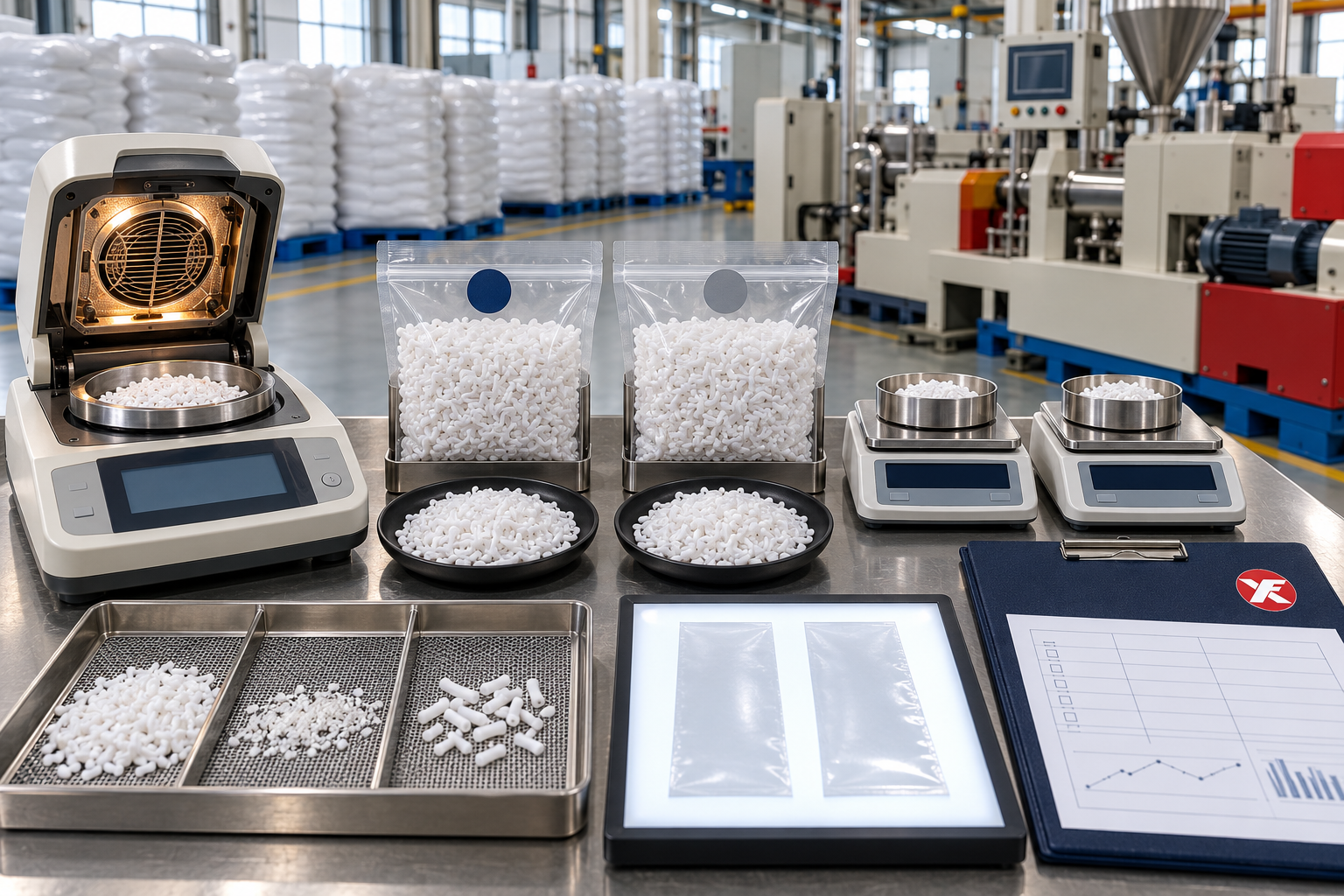
Consistent masterbatch quality is essential for stable plastic production.
A sample may perform well during the first trial, but the factory also needs subsequent deliveries to provide comparable feeding, dispersion and finished-product performance.
Large differences between batches can lead to pressure fluctuations, white spots, film breakage, colour variation and unexpected formulation changes.
A structured incoming inspection system helps manufacturers identify these differences before the material enters full production.
Why Does Batch Consistency Matter?
Plastic factories often use fixed formulations and machine settings to maintain production efficiency.
If a new masterbatch batch behaves differently, operators may need to adjust:
– Addition ratio
– Extrusion temperature
– Screen configuration
– Production speed
– Film thickness
– Sealing conditions
– Injection-moulding parameters
Frequent adjustments increase waste and make production results more difficult to predict.
Consistent raw materials help the factory maintain repeatable quality and calculate production costs more accurately.
Create an Approved Reference Sample
After a successful production trial, retain a sealed sample from the approved batch.
The reference sample should be marked with:
– Supplier name
– Product grade
– Batch number
– Delivery date
– Trial date
– Approved formulation
– Finished-product application
Keep the sample sealed and stored under suitable conditions.
Future deliveries can then be compared with the same physical reference instead of relying on memory or photographs.
Inspect the Packaging
Incoming quality inspection should begin before the bags are opened.
Check for:
– Damaged outer packaging
– Broken inner liners
– Wet bags
– Open seams
– Incorrect product identification
– Contamination
– Unusual odour
– Inconsistent bag weight
Record the condition of the delivery and photograph any damage.
Material exposed to rain or humid storage conditions should be separated until its condition is confirmed.
Compare Pellet Appearance
Open a representative bag and compare the pellets with the approved reference sample.
Look for differences in:
– Colour
– Pellet length
– Pellet diameter
– Shape
– Surface texture
– Dust level
– Clumping
– Foreign particles
Small visual differences do not always mean that the product will fail, but significant changes should be investigated before full production.
For reliable comparison, examine samples under the same lighting and use equal sample quantities.
Check Pellet Uniformity
Irregular pellet size may affect automatic dosing and mixing.
Very small particles or excessive powder can separate from larger pellets during transport. Oversized pellets may feed or melt differently from the rest of the batch.
A simple screening or visual grading test can help identify:
– Excessive fines
– Oversized pellets
– Broken particles
– Agglomerates
– Inconsistent cutting
The acceptable range should be agreed upon according to the customer’s feeding system and application.
Evaluate Moisture
Moisture can cause bubbles, pinholes, unstable extrusion and rough film surfaces.
Possible signs include:
– Pellet clumping
– Condensation inside the packaging
– Wet inner liners
– Unusual feeding behaviour
– Popping during extrusion
– Bubbles in the melt
Visual inspection alone cannot accurately determine moisture content. If moisture is critical to the application, use suitable measuring equipment and a consistent test procedure.
Compare every new result with the approved batch and the supplier’s specification.
Compare Bulk Density and Feeding
Changes in pellet shape or density may affect volumetric dosing systems.
Use the same container and procedure to compare the mass of equal material volumes. This does not replace laboratory testing, but it can reveal obvious differences between batches.
During production, monitor:
– Hopper flow
– Bridging
– Feeding interruptions
– Dosing accuracy
– Material separation
– Screw-recovery consistency
Gravimetric dosing equipment should also be calibrated regularly.
Request Relevant Quality Documents
The appropriate quality documents depend on the application and purchasing agreement.
They may include:
– Product specification
– Certificate of analysis
– Batch identification
– Safety data sheet
– Technical data
– Packaging information
– Storage recommendations
The purchaser should define which test values are important for the final product.
A document alone does not replace an incoming trial, but it helps establish traceability.
Conduct a Small Extrusion Trial
Before using a new batch in full production, test it under controlled conditions.
Use:
– The same resin grades
– The approved addition ratio
– Comparable machine settings
– The same screen configuration
– Similar production speed
– Comparable film thickness
Record:
– Feeding stability
– Extrusion pressure
– Motor load
– Melt behaviour
– Film-bubble stability
– Output rate
– Screen-changing interval
– Film appearance
Avoid adjusting multiple settings immediately. First observe how the batch performs under the approved conditions.
Check Dispersion in the Film
Collect film samples after production becomes stable.
Inspect them under normal and backlit conditions for:
– White spots
– Agglomerates
– Rough areas
– Pinholes
– Bubbles
– Uneven transparency
– Thickness variation
Compare the new film with retained film from the approved batch.
Use the same lighting, sample size and inspection distance for every comparison.
Convert the Film into Finished Bags
A batch should not be approved based only on extrusion behaviour.
Convert the film into the actual finished product and check:
– Bottom-seal strength
– Side seals
– Handle cutting
– Bag opening
– Print quality
– Tear resistance
– Load-bearing performance
– Product appearance
Some formulation differences only become visible during printing, sealing or final-use testing.
Evaluate PP Injection-Moulding Performance
For selected PP injection-moulding applications, compare:
– Feeding
– Plasticisation
– Mould filling
– Surface finish
– Colour consistency
– Product weight
– Shrinkage
– Warpage
– Impact performance
– Cycle time
Use the same mould, resin and machine settings as the approved trial whenever possible.
Retain moulded samples from each batch for future comparison.
Monitor Extrusion Pressure
Pressure behaviour provides useful information about material consistency.
Record:
– Starting pressure
– Stable running pressure
– Rate of pressure increase
– Time before screen change
– Production output
– Film defects
A new batch that causes unusually rapid pressure growth may require investigation for contamination, dispersion or formulation differences.
Machine condition and recycled resin should also be checked before assigning the cause to the masterbatch.
Use a Batch Comparison Record
The factory should define its own acceptance limits according to the product and production requirements.
Keep Traceability Records
If a production problem occurs, traceability helps identify the affected materials and finished products.
Record:
– Supplier
– Product grade
– Batch number
– Delivery date
– Warehouse location
– Production date
– Machine number
– Addition ratio
– Finished-product batch
– Inspection result
Do not mix multiple incoming batches before confirming that they perform consistently.
Investigate Problems Systematically
If a new batch produces a different result:
1. Stop mixing it with approved material.
2. Retain representative samples.
3. Confirm the batch number.
4. Review storage and packaging.
5. Check every component in the formulation.
6. Repeat a small controlled trial.
7. Photograph defects.
8. Record machine data.
9. Contact the supplier with evidence.
Provide clear production information instead of describing the problem only as “poor quality.”
Work with a Traceable Supplier
A reliable supplier should maintain control over:
– Raw-material selection
– Formulation
– Mixing
– Extrusion
– Pellet cutting
– Moisture protection
– Packaging
– Batch identification
The supplier should also be able to review retained samples and production information when a customer reports a problem.
Xinfeng manufactures sodium sulfate filler masterbatch for selected PE blown-film and PP processing applications. We support sample testing and application-specific communication before bulk supply.
Conclusion
Batch consistency should be evaluated through packaging inspection, pellet comparison, moisture testing and a controlled production trial.
The most useful quality standard is not appearance alone. A consistent masterbatch should provide repeatable feeding, extrusion pressure, dispersion and finished-product performance.
By retaining approved samples and maintaining traceability records, manufacturers can identify material differences earlier and reduce production risk.
To discuss quality-control requirements or request a sample, visit Xinfeng Masterbatch.
Send us a message now for quotation.
WhatsApp: https://wa.memessage/IRZROGA5F2RQO1
WhatsApp:+86 17835035161