


How to Test Sodium Sulfate Filler Masterbatch Before a Bulk Order
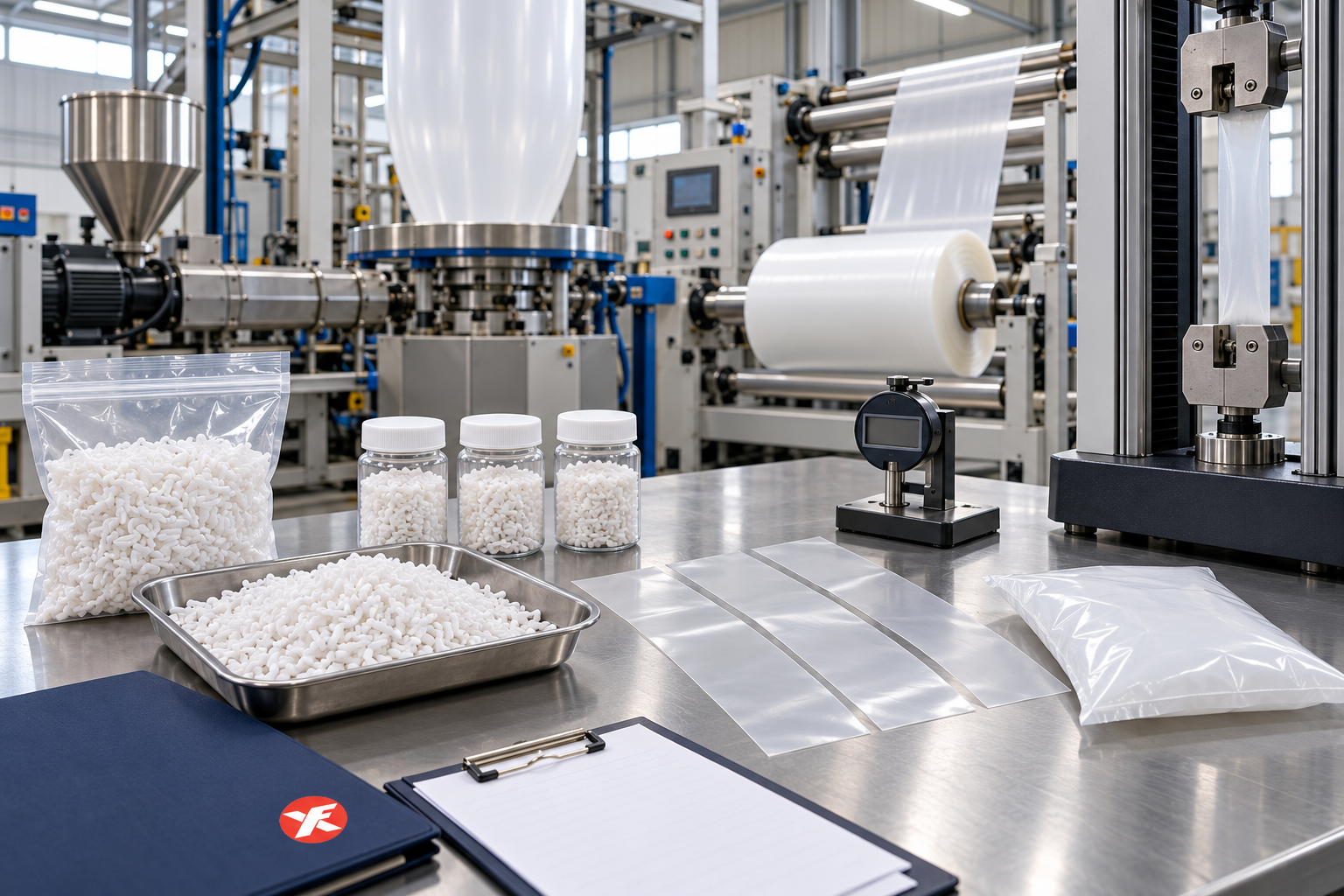
Requesting a sample is an important step when evaluating a new sodium sulfate filler masterbatch supplier.
However, producing one acceptable film sample does not automatically prove that the product is suitable for long-term production. A reliable evaluation should examine processing stability, film properties, finished-product performance and the supplier’s ability to maintain batch consistency.
The most useful trial is one performed with the buyer’s actual resin formulation, equipment, film thickness and production requirements.
This article explains how PE film and plastic bag manufacturers can evaluate a filler masterbatch sample before placing a bulk order.
Define the Purpose of the Trial
Before requesting a sample, identify what the trial needs to prove.
Possible objectives include:
– Reducing formulation cost
– Improving production efficiency
– Adjusting film stiffness
– Replacing an existing filler masterbatch
– Evaluating a new supplier
– Improving pellet feeding
– Reducing powder-handling problems
– Developing a new PE bag formulation
– Increasing recycled-material content
– Improving batch consistency
A trial without a defined objective can produce large amounts of data without providing a clear purchasing decision.
Provide the Supplier with Accurate Application Information
The supplier needs more than the words “PE blown film.”
Important information includes:
– Base resin type
– LDPE, LLDPE and HDPE blend ratio
– Virgin or recycled material content
– Existing filler content
– Film thickness
– Film width
– Film color
– Bag or film application
– Required mechanical properties
– Extruder specifications
– Current processing temperature
– Current production problems
– Target cost or performance objective
A masterbatch suitable for a thick refuse bag may not be appropriate for a thin shopping bag or printed packaging film.
The more accurate the application information, the more relevant the supplier’s sample recommendation can be.
Establish a Reference Formulation
Before testing the new masterbatch, produce a reference film using the current approved formulation.
Record:
– Raw-material grades
– Dosages
– Film thickness
– Extrusion temperatures
– Screw speed
– Melt pressure
– Motor current
– Production output
– Blow-up ratio
– Frost-line height
– Bubble stability
– Film appearance
– Mechanical test results
– Bag-making settings
The reference film provides a fair basis for comparison. Without it, normal production variation may be mistaken for an effect of the new masterbatch.
Inspect the Sample Before Production
Examine the masterbatch pellets before adding them to the mixer.
Check:
– Pellet shape
– Pellet size
– Color
– Surface appearance
– Dust level
– Pellet uniformity
– Clumping
– Foreign particles
– Packaging condition
– Product and batch identification
Pellets should be suitable for the customer’s feeding and mixing equipment.
Irregular pellet size or excessive dust may contribute to feeding inconsistency, but visual inspection alone cannot determine the complete product performance.
Confirm the Sample Identity
The supplier should clearly identify:
– Product grade
– Production batch
– Recommended application
– Carrier-resin type
– Recommended storage conditions
– Manufacturing or packing date
– Relevant technical documents
Keep the original label and retain part of the unopened sample where possible.
This retained sample can later be compared with the bulk-delivery material.
Begin with a Conservative Trial Level
Do not immediately use the highest expected filler-masterbatch dosage.
A controlled trial should begin conservatively and proceed in stages.
For example:
1. Produce the reference formulation.
2. Introduce the new masterbatch at a low trial level.
3. Keep other major variables unchanged.
4. Record the process and film results.
5. Increase the dosage only after the previous stage passes.
6. Stop when the required cost-performance balance is reached.
The appropriate trial levels depend on the resin, film thickness, equipment and finished-product specification. A universal percentage should not be applied to every customer.
Change Only One Major Variable at a Time
If the operator changes the filler dosage, resin blend, temperature, film thickness and production speed simultaneously, the result becomes difficult to interpret.
During the first comparison, try to keep the following stable:
– Base resin
– Recycled-material batch
– Color masterbatch
– Other additives
– Film thickness
– Blow-up ratio
– Production speed
– Cooling conditions
– Bag-making settings
Processing adjustments can be made after the initial effect of the new masterbatch is understood.
Record Processing Stability
A filler masterbatch should be evaluated during actual production, not only through a short visual demonstration.
Record:
– Feeding consistency
– Mixing uniformity
– Melt pressure
– Pressure variation
– Motor load
– Output
– Screen pressure
– Screen-changing frequency
– Die buildup
– Bubble stability
– Frost-line stability
– Film breaks
– Start-up waste
– Production speed
A sample may produce acceptable film for several minutes but behave differently during a longer run.
Allow enough production time to observe whether pressure or die buildup changes gradually.
Inspect Film Dispersion
Examine the trial film under both reflected and transmitted light.
Look for:
– White specks
– Agglomerates
– Fish eyes
– Gels
– Pinholes
– Streaks
– Uneven opacity
– Surface roughness
– Die lines
– Thickness bands
Poorly dispersed particles can create visible defects or localized weak points.
Research on masterbatch-containing PE films shows that dispersion can affect optical and mechanical performance. Better dispersion has been associated with improved film uniformity and elongation in controlled studies. PE masterbatch dispersion research
Measure Film Thickness Correctly
Measure thickness at several points across the film width and along the production roll.
Do not compare films with different thicknesses as though they were identical. A thicker trial film may appear stronger even if the formulation itself is not better.
Record:
– Average thickness
– Minimum thickness
– Maximum thickness
– Thickness variation
– Film weight per unit area
– Finished-bag weight
Thickness control is essential when comparing material cost and mechanical performance.
Test Mechanical Properties
The required tests depend on the application, but commonly include:
– Tensile strength
– Elongation at break
– Tear resistance
– Dart-drop impact
– Puncture resistance
– Film stiffness
– Seal strength
Test machine-direction and transverse-direction samples where applicable.
ASTM publishes methods covering the tensile, impact, tear, thickness and optical properties of plastic film. ISO 527-3 specifies conditions for determining tensile properties of plastic films and sheets below the applicable thickness limit. ASTM plastics standards, ISO 527-3 film tensile testing
Use the test methods required by the customer or target market.
Evaluate the Finished Product
A laboratory result does not replace testing of the finished bag or film product.
Depending on the application, perform:
– Heat-sealing tests
– Static load tests
– Drop tests
– Leakage tests
– Handle-punch tests
– Bag-opening tests
– Repeated-lifting tests
– Printing tests
– Corona-treatment checks
– Roll-winding evaluation
– Storage simulation
A masterbatch should not be approved merely because the film can be extruded.
Test Under Normal Production Conditions
A slow machine speed may make a formulation appear easier to process. The film should also be tested at the intended commercial output.
Confirm performance at:
– Normal production speed
– Actual commercial film thickness
– Normal film width
– Standard cooling conditions
– Usual screen configuration
– Planned bag-making speed
If the trial requires an unusually low output or frequent screen changes, include this in the cost evaluation.
Calculate the True Cost
Do not compare masterbatch prices alone.
Calculate the cost per qualified roll, square meter or finished bag.
Include:
– Base resin consumption
– Filler masterbatch cost
– Color masterbatch consumption
– Other additives
– Film weight
– Production output
– Energy consumption
– Screen replacement
– Start-up waste
– Film breaks
– Bag-making waste
– Finished-product rejection rate
A cheaper masterbatch may produce a higher total cost if it increases waste or reduces production speed.
Retain Samples from Every Trial
Keep properly identified samples of:
– Original masterbatch
– Reference film
– Each trial formulation
– Finished bags
– Failed samples
– Approved samples
Record the corresponding formulation and machine settings.
Retained samples provide a physical reference when the bulk shipment arrives or if a later production issue occurs.
Approve a Target Specification
Before placing a bulk order, agree on the characteristics that matter to the buyer.
These may include:
– Product grade
– Pellet appearance
– Carrier compatibility
– Packaging
– Batch identification
– Processing performance
– Film-defect limits
– Required documents
– Agreed test method
– Approved retained sample
Avoid relying on vague descriptions such as “good quality” or “suitable for film.”
A measurable or clearly defined acceptance requirement reduces misunderstandings.
Verify the First Bulk Shipment
The first commercial shipment should be checked against the approved sample.
Inspect:
– Packaging and labels
– Product grade
– Batch numbers
– Pellet appearance
– Dust and contamination
– Storage condition
– Production performance
– Finished-film properties
Do not mix all delivered batches before completing the incoming inspection.
If the shipment contains several production batches, keep their identities separate during initial testing.
Sample Success Does Not Guarantee Every Formulation
A sample that works with one PE resin may behave differently when the buyer changes:
– Resin supplier
– Recycled-material batch
– Film thickness
– Color masterbatch
– Processing temperature
– Production speed
– Bag design
The approved operating window should therefore state which formulation and conditions were tested.
Significant future changes may require another confirmation trial.
Evaluate the Supplier as Well as the Product
Product performance is only part of a purchasing decision.
Also evaluate:
– Technical communication
– Response time
– Application knowledge
– Traceability
– Packaging quality
– Documentation
– Production capacity
– Delivery reliability
– Complaint-handling process
– Batch-consistency controls
A supplier should be able to discuss the customer’s actual application rather than offering one fixed formula for every product.
Suggested Trial Record
A useful trial report can contain:
– Date and production line
– Supplier and product grade
– Masterbatch batch number
– Complete formulation
– Material batch numbers
– Dosage
– Film width and thickness
– Machine settings
– Production speed
– Extrusion pressure
– Observed defects
– Test results
– Finished-product results
– Cost calculation
– Final decision
– Approved operating conditions
Photographs of the film, machine conditions and finished bag can be attached to the report.
Conclusion
Testing a sodium sulfate filler masterbatch before a bulk order requires more than producing one visually acceptable film.
The buyer should compare the new material against a reference formulation, test it at the actual commercial thickness and production speed, measure the required film properties and evaluate the finished product.
Retained samples, documented machine settings and clear acceptance criteria help connect the approved sample with future bulk deliveries.
Xinfeng supplies sodium sulfate filler masterbatch for selected PE blown-film and plastic bag applications. Sample selection and production-trial recommendations can be developed according to the customer’s resin formulation, equipment, film thickness and performance requirements.
For samples or technical consultation, visit Xinfeng Masterbatch.

Send us a message now for quotation.
WhatsApp: https://wa.memessage/IRZROGA5F2RQO1
WhatsApp:+86 17835035161